



Chemical Datasheet
ARSENIC ACID, SOLID |
|
Chemical Identifiers
)
The
Chemical Identifier fields
include common identification numbers, the
NFPA diamond
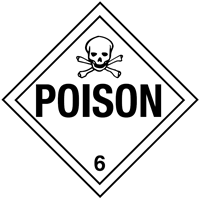
U.S. Department of Transportation hazard labels, and a general
description of the chemical. The information in CAMEO Chemicals comes
from a variety of
data sources.
| CAS Number | UN/NA Number | DOT Hazard Label | USCG CHRIS Code |
|---|---|---|---|
|
|
||
| NIOSH Pocket Guide | International Chem Safety Card | ||
Arsenic (inorganic compounds, as As)
|
|||

NFPA 704
data unavailable
General Description
White crystals. Excessive drying produces As2O5.5/3H2O.
Hazards
)
The
Hazard fields
include
special hazard alerts
air and water
reactions, fire hazards, health hazards, a reactivity profile, and
details about
reactive groups assignments
and
potentially incompatible absorbents.
The information in CAMEO Chemicals comes from a variety of
data sources.
Reactivity Alerts
none
Air & Water Reactions
Hygroscopic. Water soluble.
Fire Hazard
Excerpt from ERG Guide 154 [Substances - Toxic and/or Corrosive (Non-Combustible)]:
Non-combustible, substance itself does not burn but may decompose upon heating to produce corrosive and/or toxic fumes. Some are oxidizers and may ignite combustibles (wood, paper, oil, clothing, etc.). Corrosives in contact with metals may evolve flammable hydrogen gas. Containers may explode when heated. For electric vehicles or equipment, ERG Guide 147 (lithium ion or sodium ion batteries) or ERG Guide 138 (sodium batteries) should also be consulted. (ERG, 2024)
Non-combustible, substance itself does not burn but may decompose upon heating to produce corrosive and/or toxic fumes. Some are oxidizers and may ignite combustibles (wood, paper, oil, clothing, etc.). Corrosives in contact with metals may evolve flammable hydrogen gas. Containers may explode when heated. For electric vehicles or equipment, ERG Guide 147 (lithium ion or sodium ion batteries) or ERG Guide 138 (sodium batteries) should also be consulted. (ERG, 2024)
Health Hazard
Ingestion causes irritation of stomach, weakness, other gastrointestinal symptoms. Overdose can cause arsenic poisoning, but symptoms are delayed. (USCG, 1999)
Reactivity Profile
ARSENIC ACID may evolve very toxic gaseous arsine (AsH3) from contact with active metals, such as zinc and aluminum [Inorganic Chemicals Handbook, I, p. 175]. When heated to decomposition, it produces toxic fumes of metallic arsenic [Sax, 9th ed., p. 271]. The solution is weakly acidic and a weak oxidizing agent. Reacts with alkalis to generate some heat and precipitate arsenates.
Belongs to the Following Reactive Group(s)
Potentially Incompatible Absorbents
No information available.
Response Recommendations
)
The
Response Recommendation fields
include isolation and evacuation distances, as well as recommendations for
firefighting, non-fire response, protective clothing, and first aid. The
information in CAMEO Chemicals comes from a variety of
data sources.
Isolation and Evacuation
Excerpt from ERG Guide 154 [Substances - Toxic and/or Corrosive (Non-Combustible)]:
IMMEDIATE PRECAUTIONARY MEASURE: Isolate spill or leak area in all directions for at least 50 meters (150 feet) for liquids and at least 25 meters (75 feet) for solids.
SPILL: Increase the immediate precautionary measure distance, in the downwind direction, as necessary.
FIRE: If tank, rail tank car or highway tank is involved in a fire, ISOLATE for 800 meters (1/2 mile) in all directions; also, consider initial evacuation for 800 meters (1/2 mile) in all directions. (ERG, 2024)
IMMEDIATE PRECAUTIONARY MEASURE: Isolate spill or leak area in all directions for at least 50 meters (150 feet) for liquids and at least 25 meters (75 feet) for solids.
SPILL: Increase the immediate precautionary measure distance, in the downwind direction, as necessary.
FIRE: If tank, rail tank car or highway tank is involved in a fire, ISOLATE for 800 meters (1/2 mile) in all directions; also, consider initial evacuation for 800 meters (1/2 mile) in all directions. (ERG, 2024)
Firefighting
Excerpt from ERG Guide 154 [Substances - Toxic and/or Corrosive (Non-Combustible)]:
SMALL FIRE: Dry chemical, CO2 or water spray.
LARGE FIRE: Dry chemical, CO2, alcohol-resistant foam or water spray. If it can be done safely, move undamaged containers away from the area around the fire. Dike runoff from fire control for later disposal.
FIRE INVOLVING TANKS, RAIL TANK CARS OR HIGHWAY TANKS: Fight fire from maximum distance or use unmanned master stream devices or monitor nozzles. Do not get water inside containers. Cool containers with flooding quantities of water until well after fire is out. Withdraw immediately in case of rising sound from venting safety devices or discoloration of tank. ALWAYS stay away from tanks in direct contact with flames. (ERG, 2024)
SMALL FIRE: Dry chemical, CO2 or water spray.
LARGE FIRE: Dry chemical, CO2, alcohol-resistant foam or water spray. If it can be done safely, move undamaged containers away from the area around the fire. Dike runoff from fire control for later disposal.
FIRE INVOLVING TANKS, RAIL TANK CARS OR HIGHWAY TANKS: Fight fire from maximum distance or use unmanned master stream devices or monitor nozzles. Do not get water inside containers. Cool containers with flooding quantities of water until well after fire is out. Withdraw immediately in case of rising sound from venting safety devices or discoloration of tank. ALWAYS stay away from tanks in direct contact with flames. (ERG, 2024)
Non-Fire Response
Neutralizing Agents for Acids and Caustics: Flush with water, rinse with sodium bicarbonate or lime solution. (USCG, 1999)
Protective Clothing
Calamine lotion and zinc oxide powder on hands and other skin areas; rubber gloves; U. S. Bureau of Mines approved dust respirator. (USCG, 1999)
DuPont Tychem® Suit Fabrics
No information available.
First Aid
Get medical attention after all exposures to this compound. Be alert for arsenic poisoning symptoms.
SKIN: wash well with soap and water.
INGESTION: induce vomiting; drink freely lime water, milk, or raw egg; give a cathartic. (USCG, 1999)
SKIN: wash well with soap and water.
INGESTION: induce vomiting; drink freely lime water, milk, or raw egg; give a cathartic. (USCG, 1999)
Physical Properties
)
The
Physical Property fields
include properties such as vapor pressure and
boiling point, as well as explosive limits and
toxic exposure thresholds
The information in CAMEO Chemicals comes from a variety of
data sources.
Note: For Vapor Density and Specific Gravity, comparing the value to 1.0 can tell you if the chemical will likely sink/rise in air or sink/float in fresh water (respectively). Short phrases have been added to those values below as an aid. However, make sure to also consider the circumstances of a release. The Vapor Density comparisons are only valid when the gas escaping is at the same temperature as the surrounding air itself. If the chemical is escaping from a container where it was pressurized or refrigerated, it may first escape and behave as a heavy gas and sink in the air (even if it has a Vapor Density value less than 1). Also, the Specific Gravity comparisons are for fresh water (density 1.0 g/mL). If your spill is in salt water (density about 1.027 g/mL), you need to adjust the point of comparison. There are some chemicals that will sink in fresh water and float in salt water.
Note: For Vapor Density and Specific Gravity, comparing the value to 1.0 can tell you if the chemical will likely sink/rise in air or sink/float in fresh water (respectively). Short phrases have been added to those values below as an aid. However, make sure to also consider the circumstances of a release. The Vapor Density comparisons are only valid when the gas escaping is at the same temperature as the surrounding air itself. If the chemical is escaping from a container where it was pressurized or refrigerated, it may first escape and behave as a heavy gas and sink in the air (even if it has a Vapor Density value less than 1). Also, the Specific Gravity comparisons are for fresh water (density 1.0 g/mL). If your spill is in salt water (density about 1.027 g/mL), you need to adjust the point of comparison. There are some chemicals that will sink in fresh water and float in salt water.
| Chemical Formula: |
|
Flash Point: data unavailable
Lower Explosive Limit (LEL): data unavailable
Upper Explosive Limit (UEL): data unavailable
Autoignition Temperature: data unavailable
Melting Point: data unavailable
Vapor Pressure: data unavailable
Vapor Density (Relative to Air): data unavailable
Specific Gravity:
2.2
at 68°F
(USCG, 1999)
- Denser than water; will sink
Boiling Point: data unavailable
Molecular Weight:
229.8
(USCG, 1999)
Water Solubility: data unavailable
Ionization Energy/Potential: data unavailable
IDLH:
5 mg As/m3
; A potential occupational carcinogen.
(NIOSH, 2024)
AEGLs (Acute Exposure Guideline Levels)
No AEGL information available.ERPGs (Emergency Response Planning Guidelines)
No ERPG information available.PACs (Protective Action Criteria)
| Chemical | PAC-1 | PAC-2 | PAC-3 |
|---|---|---|---|
| Arsenic acid; (o-Arsenic acid) Also CASRN 1327-52-2 (7778-39-4) | 2.9 mg/m3 | 32 mg/m3 | 190 mg/m3 |
(DOE, 2024)
Regulatory Information
)
The
Regulatory Information fields
include information from
the U.S. Environmental Protection Agency's Title III Consolidated List of
Lists,
the U.S. Cybersecurity and Infrastructure Security Agency's Chemical Facility
Anti-Terrorism Standards,
and the U.S. Occupational Safety and Health Administration's
Process Safety Management of Highly Hazardous Chemicals Standard List
(see more about these
data sources).
EPA Consolidated List of Lists
| Regulatory Name | CAS Number/ 313 Category Code |
EPCRA 302 EHS TPQ |
EPCRA 304 EHS RQ |
CERCLA RQ | EPCRA 313 TRI |
RCRA Code |
CAA 112(r) RMP TQ |
|---|---|---|---|---|---|---|---|
| Arsenic Compounds | N020 | & | 313 | ||||
| Arsenic acid | 7778-39-4 | 1 pound | 313c | P010 |
- 313c indicates that although not listed by name and CAS number, this chemical is reportable under one or more of the EPCRA section 313 chemical categories.
- & indicates that no RQ is assigned to this generic or broad class, although the class is a CERCLA hazardous substance. See 50 Federal Register 13456 (April 4, 1985).
(EPA List of Lists, 2024)
CISA Chemical Facility Anti-Terrorism Standards (CFATS)
No regulatory information available.OSHA Process Safety Management (PSM) Standard List
No regulatory information available.Alternate Chemical Names
)
This section provides a listing of alternate names for this chemical,
including trade names and synonyms.
- ARSENIC ACID
- ARSENIC ACID, SOLID
- ARSENIC ACID, [SOLID]
- ORTHOARSENIC ACID

Web site owner:
Office of Response and Restoration,
National Ocean Service,
National Oceanic and Atmospheric Administration.
USA.gov.
CAMEO Chemicals version 3.1.0 rev 1.