



Chemical Datasheet
IRON PENTACARBONYL |
|
Chemical Identifiers
)
The
Chemical Identifier fields
include common identification numbers, the
NFPA diamond
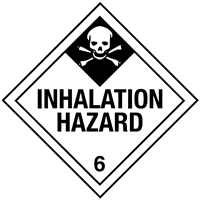
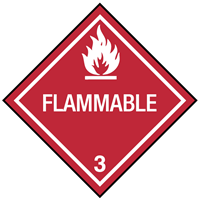
U.S. Department of Transportation hazard labels, and a general
description of the chemical. The information in CAMEO Chemicals comes
from a variety of
data sources.
| CAS Number | UN/NA Number | DOT Hazard Label | USCG CHRIS Code |
|---|---|---|---|
|
|
none | |
| NIOSH Pocket Guide | International Chem Safety Card | ||
Iron pentacarbonyl (as Fe)
|
|||

NFPA 704
| Diamond | Hazard | Value | Description | |||||||||
|---|---|---|---|---|---|---|---|---|---|---|---|---|
|
 Health
|
1 | Can cause significant irritation. | |||||||||
 Flammability
|
3 | Can be ignited under almost all ambient temperature conditions. | ||||||||||
 Instability
|
1 | Normally stable but can become unstable at elevated temperatures and pressures. | ||||||||||
 Special
|
(NFPA, 2010)
General Description
A yellow to dark red liquid. Insoluble in water and denser than water. Very toxic by inhalation, ingestion, and skin absorption. Flash point 5°F. Used to make other chemicals.
Hazards
)
The
Hazard fields
include
special hazard alerts
air and water
reactions, fire hazards, health hazards, a reactivity profile, and
details about
reactive groups assignments
and
potentially incompatible absorbents.
The information in CAMEO Chemicals comes from a variety of
data sources.
Reactivity Alerts
- Strong Reducing Agent
- Pyrophoric
Air & Water Reactions
Highly flammable. Iron pentacarbonyl is spontaneously flammable in air, [R. Kamo, IIT Progs. Rept. 1, p. 23(1962)]. Insoluble in water.
Fire Hazard
This material may be ignited by heat, sparks, or flames. Vapors may travel to ignition source and flash back. Containers may explode in the heat of fire. Evolution of carbon monoxide may create a poison hazard. This material presents a vapor explosion and poison hazard indoors, outdoors, or in sewers. Evolves carbon monoxide on exposure to air or to light. Emits carbon monoxide when heated to decomposition. Avoid acetic acid, water, nitrogen oxide, transition metal halides, and zinc and it burns in air. Decomposes in acids and alkalies. Protect from light and air. (EPA, 1998)
Health Hazard
Toxicity of this compound is high via all routes of entry. Cyanosis (bluish discoloration of skin) and circulatory collapse may occur after exposure. Death may result. Pneumonitis and injury to the kidneys, liver, and central nervous system may also occur. (EPA, 1998)
Reactivity Profile
Organometallics, such as IRON PENTACARBONYL, are reactive with many other groups. Incompatible with acids and bases. Organometallics are good reducing agents and therefore incompatible with oxidizing agents. Often reactive with water to generate toxic or flammable gases. A brown pyrophoric powder is produced by the combination of the carbonyl with acetic acid containing greater than 5% of water.
Belongs to the Following Reactive Group(s)
Potentially Incompatible Absorbents
No information available.
Response Recommendations
)
The
Response Recommendation fields
include isolation and evacuation distances, as well as recommendations for
firefighting, non-fire response, protective clothing, and first aid. The
information in CAMEO Chemicals comes from a variety of
data sources.
Isolation and Evacuation
For spills, see ERG Table 1 - Initial Isolation and Protective Action Distances on the UN/NA 1994 datasheet.
Excerpt from ERG Guide 136 [Substances - Spontaneously Combustible - Toxic and/or Corrosive (Air-Reactive)]:
IMMEDIATE PRECAUTIONARY MEASURE: Isolate spill or leak area in all directions for at least 50 meters (150 feet) for liquids and at least 25 meters (75 feet) for solids.
SPILL: Consider initial downwind evacuation for at least 300 meters (1000 feet).
FIRE: If tank, rail car or tank truck is involved in a fire, ISOLATE for 800 meters (1/2 mile) in all directions; also, consider initial evacuation for 800 meters (1/2 mile) in all directions. (ERG, 2020)
Excerpt from ERG Guide 136 [Substances - Spontaneously Combustible - Toxic and/or Corrosive (Air-Reactive)]:
IMMEDIATE PRECAUTIONARY MEASURE: Isolate spill or leak area in all directions for at least 50 meters (150 feet) for liquids and at least 25 meters (75 feet) for solids.
SPILL: Consider initial downwind evacuation for at least 300 meters (1000 feet).
FIRE: If tank, rail car or tank truck is involved in a fire, ISOLATE for 800 meters (1/2 mile) in all directions; also, consider initial evacuation for 800 meters (1/2 mile) in all directions. (ERG, 2020)
Firefighting
Isolate hazard area and deny entry. Stay upwind and keep out of low areas. Isolate area for 1/2 mile in all directions if tank car or truck is involved in fire. Wear positive pressure breathing apparatus and special protective clothing. Cool containers exposed to flames with water until fire is out. Withdraw immediately in case of rising sound from venting safety device or any discoloration of tank due to fire.
This material is incompatible with water. Use dry chemical, carbon dioxide, water spray, or foam for small fires, and water spray, fog, or foam for large fires. Move material from fire area if this can be done without risk. Dike fire control water for later disposal. (EPA, 1998)
This material is incompatible with water. Use dry chemical, carbon dioxide, water spray, or foam for small fires, and water spray, fog, or foam for large fires. Move material from fire area if this can be done without risk. Dike fire control water for later disposal. (EPA, 1998)
Non-Fire Response
Excerpt from ERG Guide 136 [Substances - Spontaneously Combustible - Toxic and/or Corrosive (Air-Reactive)]:
ELIMINATE all ignition sources (no smoking, flares, sparks or flames) from immediate area. Do not touch or walk through spilled material. Do not touch damaged containers or spilled material unless wearing appropriate protective clothing. Stop leak if you can do it without risk.
SMALL SPILL: Cover with water, sand or earth. Shovel into metal container and keep material under water.
LARGE SPILL: Dike for later disposal and cover with wet sand or earth. Prevent entry into waterways, sewers, basements or confined areas. (ERG, 2020)
ELIMINATE all ignition sources (no smoking, flares, sparks or flames) from immediate area. Do not touch or walk through spilled material. Do not touch damaged containers or spilled material unless wearing appropriate protective clothing. Stop leak if you can do it without risk.
SMALL SPILL: Cover with water, sand or earth. Shovel into metal container and keep material under water.
LARGE SPILL: Dike for later disposal and cover with wet sand or earth. Prevent entry into waterways, sewers, basements or confined areas. (ERG, 2020)
Protective Clothing
Excerpt from NIOSH Pocket Guide for Iron pentacarbonyl (as Fe):
Skin: PREVENT SKIN CONTACT - Wear appropriate personal protective clothing to prevent skin contact.
Eyes: PREVENT EYE CONTACT - Wear appropriate eye protection to prevent eye contact.
Wash skin: WHEN CONTAMINATED - The worker should immediately wash the skin when it becomes contaminated.
Remove: WHEN WET (FLAMMABLE) - Work clothing that becomes wet should be immediately removed due to its flammability hazard (i.e., for liquids with a flash point <100°F).
Change: No recommendation is made specifying the need for the worker to change clothing after the workshift.
Provide: QUICK DRENCH - Facilities for quickly drenching the body should be provided within the immediate work area for emergency use where there is a possibility of exposure. [Note: It is intended that these facilities provide a sufficient quantity or flow of water to quickly remove the substance from any body areas likely to be exposed. The actual determination of what constitutes an adequate quick drench facility depends on the specific circumstances. In certain instances, a deluge shower should be readily available, whereas in others, the availability of water from a sink or hose could be considered adequate.] (NIOSH, 2023)
:Skin: PREVENT SKIN CONTACT - Wear appropriate personal protective clothing to prevent skin contact.
Eyes: PREVENT EYE CONTACT - Wear appropriate eye protection to prevent eye contact.
Wash skin: WHEN CONTAMINATED - The worker should immediately wash the skin when it becomes contaminated.
Remove: WHEN WET (FLAMMABLE) - Work clothing that becomes wet should be immediately removed due to its flammability hazard (i.e., for liquids with a flash point <100°F).
Change: No recommendation is made specifying the need for the worker to change clothing after the workshift.
Provide: QUICK DRENCH - Facilities for quickly drenching the body should be provided within the immediate work area for emergency use where there is a possibility of exposure. [Note: It is intended that these facilities provide a sufficient quantity or flow of water to quickly remove the substance from any body areas likely to be exposed. The actual determination of what constitutes an adequate quick drench facility depends on the specific circumstances. In certain instances, a deluge shower should be readily available, whereas in others, the availability of water from a sink or hose could be considered adequate.] (NIOSH, 2023)
DuPont Tychem® Suit Fabrics
No information available.
First Aid
Warning: Effects may be delayed 12 to 36 hours. Caution is advised. Emesis may be contraindicated if victim has ingested a mixture of iron, pentacarbonyl and a hydrocarbon solvent or fuel.
Signs and Symptoms of Iron, Pentacarbonyl- Exposure: Acute exposure to iron, pentacarbonyl- may produce dizziness, nausea, and vomiting. Delayed effects may include fever, cough, chest pain, pulmonary irritation, dypsnea (difficulty breathing), and respiratory failure. Continuous exposure may lead to coma.
Emergency Life-Support Procedures: Acute exposure to iron, pentacarbonyl- may require decontamination and life support for the victims. Emergency personnel should wear protective clothing appropriate to the type and degree of contamination. Air-purifying or supplied-air respiratory equipment should also be worn, as necessary. Rescue vehicles should carry supplies such as plastic sheeting and disposable plastic bags to assist in preventing spread of contamination.
Inhalation Exposure:
1. Move victims to fresh air. Emergency personnel should avoid self-exposure to iron, pentacarbonyl-.
2. Evaluate vital signs including pulse and respiratory rate, and note any trauma. If no pulse is detected, provide CPR. If not breathing, provide artificial respiration. If breathing is labored, administer oxygen or other respiratory support.
3. Obtain authorization and/or further instructions from the local hospital for administration of an antidote or performance of other invasive procedures.
4. Rush to a health care facility.
Dermal/Eye Exposure:
1. Remove victims from exposure. Emergency personnel should avoid self-exposure to iron, pentacarbonyl-.
2. Evaluate vital signs including pulse and respiratory rate, and note any trauma. If no pulse is detected, provide CPR. If not breathing, provide artificial respiration. If breathing is labored, administer oxygen or other respiratory support.
3. Remove and isolate contaminated clothing as soon as possible.
4. If eye exposure has occurred, eyes must be flushed with lukewarm water for at least 15 minutes.
5. Wash exposed skin areas thoroughly with soap and water.
6. Obtain authorization and/or further instructions from the local hospital for administration of an antidote or performance of other invasive procedures.
7. Rush to a health care facility.
Ingestion Exposure:
1. Evaluate vital signs including pulse and respiratory rate, and note any trauma. If no pulse is detected, provide CPR. If not breathing, provide artificial respiration. If breathing is labored, administer oxygen or other respiratory support.
2. Obtain authorization and/or further instructions from the local hospital for administration of an antidote or performance of other invasive procedures.
3. Vomiting may be induced with syrup of Ipecac. If elapsed time since ingestion of iron, pentacarbonyl- is unknown or suspected to be greater than 30 minutes, do not induce vomiting and proceed to Step
4. Ipecac should not be administered to children under 6 months of age. Warning: Syrup of Ipecac should be administered only if victims are alert, have an active gag-reflex, and show no signs of impending seizure or coma. If ANY uncertainty exists, proceed to Step
4. The following dosages of Ipecac are recommended: children up to 1 year old, 10 mL (1/3 oz); children 1 to 12 years old, 15 mL (1/2 oz); adults, 30 mL (1 oz). Ambulate (walk) the victims and give large quantities of water. If vomiting has not occurred after 15 minutes, Ipecac may be readministered. Continue to ambulate and give water to the victims. If vomiting has not occurred within 15 minutes after second administration of Ipecac, administer activated charcoal.
4. Activated charcoal may be administered if victims are conscious and alert. Use 15 to 30 g (1/2 to 1 oz) for children, 50 to 100 g (1-3/4 to 3-1/2 oz) for adults, with 125 to 250 mL (1/2 to 1 cup) of water.
5. Promote excretion by administering a saline cathartic or sorbitol to conscious and alert victims. Children require 15 to 30 g (1/2 to 1 oz) of cathartic; 50 to 100 g (1-3/4 to 3-1/2 oz) is recommended for adults.
6. Rush to a health care facility. (EPA, 1998)
Signs and Symptoms of Iron, Pentacarbonyl- Exposure: Acute exposure to iron, pentacarbonyl- may produce dizziness, nausea, and vomiting. Delayed effects may include fever, cough, chest pain, pulmonary irritation, dypsnea (difficulty breathing), and respiratory failure. Continuous exposure may lead to coma.
Emergency Life-Support Procedures: Acute exposure to iron, pentacarbonyl- may require decontamination and life support for the victims. Emergency personnel should wear protective clothing appropriate to the type and degree of contamination. Air-purifying or supplied-air respiratory equipment should also be worn, as necessary. Rescue vehicles should carry supplies such as plastic sheeting and disposable plastic bags to assist in preventing spread of contamination.
Inhalation Exposure:
1. Move victims to fresh air. Emergency personnel should avoid self-exposure to iron, pentacarbonyl-.
2. Evaluate vital signs including pulse and respiratory rate, and note any trauma. If no pulse is detected, provide CPR. If not breathing, provide artificial respiration. If breathing is labored, administer oxygen or other respiratory support.
3. Obtain authorization and/or further instructions from the local hospital for administration of an antidote or performance of other invasive procedures.
4. Rush to a health care facility.
Dermal/Eye Exposure:
1. Remove victims from exposure. Emergency personnel should avoid self-exposure to iron, pentacarbonyl-.
2. Evaluate vital signs including pulse and respiratory rate, and note any trauma. If no pulse is detected, provide CPR. If not breathing, provide artificial respiration. If breathing is labored, administer oxygen or other respiratory support.
3. Remove and isolate contaminated clothing as soon as possible.
4. If eye exposure has occurred, eyes must be flushed with lukewarm water for at least 15 minutes.
5. Wash exposed skin areas thoroughly with soap and water.
6. Obtain authorization and/or further instructions from the local hospital for administration of an antidote or performance of other invasive procedures.
7. Rush to a health care facility.
Ingestion Exposure:
1. Evaluate vital signs including pulse and respiratory rate, and note any trauma. If no pulse is detected, provide CPR. If not breathing, provide artificial respiration. If breathing is labored, administer oxygen or other respiratory support.
2. Obtain authorization and/or further instructions from the local hospital for administration of an antidote or performance of other invasive procedures.
3. Vomiting may be induced with syrup of Ipecac. If elapsed time since ingestion of iron, pentacarbonyl- is unknown or suspected to be greater than 30 minutes, do not induce vomiting and proceed to Step
4. Ipecac should not be administered to children under 6 months of age. Warning: Syrup of Ipecac should be administered only if victims are alert, have an active gag-reflex, and show no signs of impending seizure or coma. If ANY uncertainty exists, proceed to Step
4. The following dosages of Ipecac are recommended: children up to 1 year old, 10 mL (1/3 oz); children 1 to 12 years old, 15 mL (1/2 oz); adults, 30 mL (1 oz). Ambulate (walk) the victims and give large quantities of water. If vomiting has not occurred after 15 minutes, Ipecac may be readministered. Continue to ambulate and give water to the victims. If vomiting has not occurred within 15 minutes after second administration of Ipecac, administer activated charcoal.
4. Activated charcoal may be administered if victims are conscious and alert. Use 15 to 30 g (1/2 to 1 oz) for children, 50 to 100 g (1-3/4 to 3-1/2 oz) for adults, with 125 to 250 mL (1/2 to 1 cup) of water.
5. Promote excretion by administering a saline cathartic or sorbitol to conscious and alert victims. Children require 15 to 30 g (1/2 to 1 oz) of cathartic; 50 to 100 g (1-3/4 to 3-1/2 oz) is recommended for adults.
6. Rush to a health care facility. (EPA, 1998)
Physical Properties
)
The
Physical Property fields
include properties such as vapor pressure and
boiling point, as well as explosive limits and
toxic exposure thresholds
The information in CAMEO Chemicals comes from a variety of
data sources.
Note: For Vapor Density and Specific Gravity, comparing the value to 1.0 can tell you if the chemical will likely sink/rise in air or sink/float in fresh water (respectively). Short phrases have been added to those values below as an aid. However, make sure to also consider the circumstances of a release. The Vapor Density comparisons are only valid when the gas escaping is at the same temperature as the surrounding air itself. If the chemical is escaping from a container where it was pressurized or refrigerated, it may first escape and behave as a heavy gas and sink in the air (even if it has a Vapor Density value less than 1). Also, the Specific Gravity comparisons are for fresh water (density 1.0 g/mL). If your spill is in salt water (density about 1.027 g/mL), you need to adjust the point of comparison. There are some chemicals that will sink in fresh water and float in salt water.
Note: For Vapor Density and Specific Gravity, comparing the value to 1.0 can tell you if the chemical will likely sink/rise in air or sink/float in fresh water (respectively). Short phrases have been added to those values below as an aid. However, make sure to also consider the circumstances of a release. The Vapor Density comparisons are only valid when the gas escaping is at the same temperature as the surrounding air itself. If the chemical is escaping from a container where it was pressurized or refrigerated, it may first escape and behave as a heavy gas and sink in the air (even if it has a Vapor Density value less than 1). Also, the Specific Gravity comparisons are for fresh water (density 1.0 g/mL). If your spill is in salt water (density about 1.027 g/mL), you need to adjust the point of comparison. There are some chemicals that will sink in fresh water and float in salt water.
| Chemical Formula: |
|
Flash Point:
5°F
(EPA, 1998)
Lower Explosive Limit (LEL): data unavailable
Upper Explosive Limit (UEL): data unavailable
Autoignition Temperature: data unavailable
Melting Point:
-5.8°F
(EPA, 1998)
Vapor Pressure:
40 mmHg
at 86.54°F
(EPA, 1998)
Vapor Density (Relative to Air):
6.74
(EPA, 1998)
- Heavier than air; will sink
Specific Gravity:
1.457
at 69.8°F
(EPA, 1998)
- Denser than water; will sink
Boiling Point:
216.8°F
at 749 mmHg
(EPA, 1998)
Molecular Weight:
195.9
(EPA, 1998)
Water Solubility:
Insoluble
(NIOSH, 2023)
Ionization Energy/Potential: data unavailable
IDLH:
0.4 ppm
(NIOSH, 2023)
AEGLs (Acute Exposure Guideline Levels)
| Exposure Period | AEGL-1 | AEGL-2 | AEGL-3 |
|---|---|---|---|
| 10 minutes | NR | 0.077 ppm | 0.23 ppm |
| 30 minutes | NR | 0.077 ppm | 0.23 ppm |
| 60 minutes | NR | 0.06 ppm | 0.18 ppm |
| 4 hours | NR | 0.037 ppm | 0.11 ppm |
| 8 hours | NR | 0.025 ppm | 0.075 ppm |
NR = Not recommended due to insufficient data
(NAC/NRC, 2023)
ERPGs (Emergency Response Planning Guidelines)
No ERPG information available.PACs (Protective Action Criteria)
| Chemical | PAC-1 | PAC-2 | PAC-3 |
|---|---|---|---|
| Iron pentacarbonyl (13463-40-6) | 0.0055 ppm | 0.06 ppm | 0.18 ppm |
(DOE, 2018)
Regulatory Information
)
The
Regulatory Information fields
include information from
the U.S. Environmental Protection Agency's Title III Consolidated List of
Lists,
the U.S. Cybersecurity and Infrastructure Security Agency's Chemical Facility
Anti-Terrorism Standards,
and the U.S. Occupational Safety and Health Administration's
Process Safety Management of Highly Hazardous Chemicals Standard List
(see more about these
data sources).
EPA Consolidated List of Lists
| Regulatory Name | CAS Number/ 313 Category Code |
EPCRA 302 EHS TPQ |
EPCRA 304 EHS RQ |
CERCLA RQ | EPCRA 313 TRI |
RCRA Code |
CAA 112(r) RMP TQ |
|---|---|---|---|---|---|---|---|
| Iron carbonyl (Fe(CO)5), (TB-5-11)- | 13463-40-6 | 100 pounds | 100 pounds | X | 2500 pounds | ||
| Iron, pentacarbonyl- | 13463-40-6 | 100 pounds | 100 pounds | 313 | 2500 pounds |
- "X" indicates that this is a second name for an EPCRA section 313 chemical already included on this consolidated list. May also indicate that the same chemical with the same CAS number appears on another list with a different chemical name.
(EPA List of Lists, 2022)
CISA Chemical Facility Anti-Terrorism Standards (CFATS)
| RELEASE | THEFT | SABOTAGE | ||||||||
|---|---|---|---|---|---|---|---|---|---|---|
| Chemical of Interest | CAS Number | Min Conc | STQ | Security Issue |
Min Conc | STQ | Security Issue |
Min Conc | STQ | Security Issue |
| Iron, pentacarbonyl-; [Iron carbonyl (Fe(CO)5), (TB5-11)-] | 13463-40-6 | 1.00 % | 10000 pounds | flammable | ||||||
(CISA, 2007)
OSHA Process Safety Management (PSM) Standard List
| Chemical Name | CAS Number | Threshold Quantity (TQ) |
|---|---|---|
| Iron, Pentacarbonyl | 13463-40-6 | 250 pounds |
(OSHA, 2019)
Alternate Chemical Names
)
This section provides a listing of alternate names for this chemical,
including trade names and synonyms.
- IRON CARBONYL
- IRON CARBONYL (FE(CO)5)
- IRON CARBONYL (FE(CO)5), (TB-5-11)-
- IRON PENTACARBONYL
- IRON PENTACARBONYL (FE(CO)5)
- PENTACARBONYL IRON
- PENTACARBONYLIRON
- R 20

Web site owner:
Office of Response and Restoration,
National Ocean Service,
National Oceanic and Atmospheric Administration.
USA.gov.
CAMEO Chemicals version 3.0.0.