



Chemical Datasheet
1,1,1-TRICHLOROETHANE |
|
Chemical Identifiers
)
The
Chemical Identifier fields
include common identification numbers, the
NFPA diamond
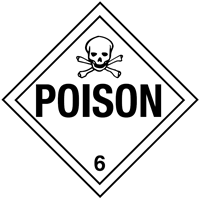
U.S. Department of Transportation hazard labels, and a general
description of the chemical. The information in CAMEO Chemicals comes
from a variety of
data sources.
| CAS Number | UN/NA Number | DOT Hazard Label | USCG CHRIS Code |
|---|---|---|---|
|
|
||
| NIOSH Pocket Guide | International Chem Safety Card | ||
Methyl chloroform
|
|||


NFPA 704
| Diamond | Hazard | Value | Description | |||||||||
|---|---|---|---|---|---|---|---|---|---|---|---|---|
|
 Health
|
2 | Can cause temporary incapacitation or residual injury. | |||||||||
 Flammability
|
1 | Must be preheated before ignition can occur. | ||||||||||
 Instability
|
0 | Normally stable, even under fire conditions. | ||||||||||
 Special
|
(NFPA, 2010)
General Description
A colorless liquid with a sweet, pleasant odor. May irritate skin, eyes and mucous membranes. In high concentrations the vapors may have a narcotic effect. Nonflammable, but may decompose and emit toxic chloride fumes if exposed to high temperatures. Used as a solvent.
Hazards
)
The
Hazard fields
include
special hazard alerts
air and water
reactions, fire hazards, health hazards, a reactivity profile, and
details about
reactive groups assignments
and
potentially incompatible absorbents.
The information in CAMEO Chemicals comes from a variety of
data sources.
Reactivity Alerts
none
Air & Water Reactions
Insoluble in water. Absorbs some water.
Fire Hazard
Special Hazards of Combustion Products: Toxic and irritating gases are generated in fires. (USCG, 1999)
Health Hazard
INHALATION: symptoms range from loss of equilibrium and incoordination to loss of consciousness; high concentration can be fatal due to simple asphyxiation combined with loss of consciousness. INGESTION: produces effects similar to inhalation and may cause some feeling of nausea. EYES: slightly irritating and lachrymatory. SKIN: defatting action may cause dermatitis. (USCG, 1999)
Reactivity Profile
1,1,1-TRICHLOROETHANE decomposes in the presence of chemically active metals. This includes aluminum, magnesium and their alloys. It will react violently with dinitrogen tetraoxide, oxygen, liquid oxygen, sodium and sodium-potassium alloys. It will also react violently with acetone, zinc and nitrates. It can react with sodium hydroxide. It is incompatible with strong oxidizers and strong bases. Mixtures with potassium or its alloys are shock-sensitive and may explode on light impact. This chemical can react with an aqueous suspension of calcium hydroxide, and with chlorine in sunlight. It will attack some forms of plastics, rubber and coatings. Upon contact with hot metal or on exposure to ultraviolet radiation, it will decompose to form irritant gases. A cobalt/molybdenum-alumina catalyst will generate a substantial exotherm on contact with its vapor at ambient temperatures. Hazardous reactions also occur with (aluminum oxide + heavy metals). (NTP, 1992).
Belongs to the Following Reactive Group(s)
Potentially Incompatible Absorbents
No information available.
Response Recommendations
)
The
Response Recommendation fields
include isolation and evacuation distances, as well as recommendations for
firefighting, non-fire response, protective clothing, and first aid. The
information in CAMEO Chemicals comes from a variety of
data sources.
Isolation and Evacuation
Excerpt from ERG Guide 160 [Halogenated Solvents]:
IMMEDIATE PRECAUTIONARY MEASURE: Isolate spill or leak area for at least 50 meters (150 feet) in all directions.
LARGE SPILL: Consider initial downwind evacuation for at least 100 meters (330 feet).
FIRE: If tank, rail tank car or highway tank is involved in a fire, ISOLATE for 800 meters (1/2 mile) in all directions; also, consider initial evacuation for 800 meters (1/2 mile) in all directions. (ERG, 2024)
IMMEDIATE PRECAUTIONARY MEASURE: Isolate spill or leak area for at least 50 meters (150 feet) in all directions.
LARGE SPILL: Consider initial downwind evacuation for at least 100 meters (330 feet).
FIRE: If tank, rail tank car or highway tank is involved in a fire, ISOLATE for 800 meters (1/2 mile) in all directions; also, consider initial evacuation for 800 meters (1/2 mile) in all directions. (ERG, 2024)
Firefighting
Excerpt from ERG Guide 160 [Halogenated Solvents]:
SMALL FIRE: Dry chemical, CO2 or water spray.
LARGE FIRE: Dry chemical, CO2, alcohol-resistant foam or water spray. If it can be done safely, move undamaged containers away from the area around the fire. Dike runoff from fire control for later disposal.
FIRE INVOLVING TANKS, RAIL TANK CARS OR HIGHWAY TANKS: Fight fire from maximum distance or use unmanned master stream devices or monitor nozzles. Cool containers with flooding quantities of water until well after fire is out. Withdraw immediately in case of rising sound from venting safety devices or discoloration of tank. ALWAYS stay away from tanks in direct contact with flames. (ERG, 2024)
SMALL FIRE: Dry chemical, CO2 or water spray.
LARGE FIRE: Dry chemical, CO2, alcohol-resistant foam or water spray. If it can be done safely, move undamaged containers away from the area around the fire. Dike runoff from fire control for later disposal.
FIRE INVOLVING TANKS, RAIL TANK CARS OR HIGHWAY TANKS: Fight fire from maximum distance or use unmanned master stream devices or monitor nozzles. Cool containers with flooding quantities of water until well after fire is out. Withdraw immediately in case of rising sound from venting safety devices or discoloration of tank. ALWAYS stay away from tanks in direct contact with flames. (ERG, 2024)
Non-Fire Response
Excerpt from ERG Guide 160 [Halogenated Solvents]:
ELIMINATE all ignition sources (no smoking, flares, sparks or flames) from immediate area. Stop leak if you can do it without risk.
SMALL LIQUID SPILL: Pick up with sand, earth or other non-combustible absorbent material.
LARGE SPILL: Dike far ahead of liquid spill for later disposal. Prevent entry into waterways, sewers, basements or confined areas. (ERG, 2024)
ELIMINATE all ignition sources (no smoking, flares, sparks or flames) from immediate area. Stop leak if you can do it without risk.
SMALL LIQUID SPILL: Pick up with sand, earth or other non-combustible absorbent material.
LARGE SPILL: Dike far ahead of liquid spill for later disposal. Prevent entry into waterways, sewers, basements or confined areas. (ERG, 2024)
Protective Clothing
Excerpt from NIOSH Pocket Guide for Methyl chloroform:
Skin: PREVENT SKIN CONTACT - Wear appropriate personal protective clothing to prevent skin contact.
Eyes: PREVENT EYE CONTACT - Wear appropriate eye protection to prevent eye contact.
Wash skin: WHEN CONTAMINATED - The worker should immediately wash the skin when it becomes contaminated.
Remove: WHEN WET OR CONTAMINATED - Work clothing that becomes wet or significantly contaminated should be removed and replaced.
Change: No recommendation is made specifying the need for the worker to change clothing after the workshift. (NIOSH, 2024)
:Skin: PREVENT SKIN CONTACT - Wear appropriate personal protective clothing to prevent skin contact.
Eyes: PREVENT EYE CONTACT - Wear appropriate eye protection to prevent eye contact.
Wash skin: WHEN CONTAMINATED - The worker should immediately wash the skin when it becomes contaminated.
Remove: WHEN WET OR CONTAMINATED - Work clothing that becomes wet or significantly contaminated should be removed and replaced.
Change: No recommendation is made specifying the need for the worker to change clothing after the workshift. (NIOSH, 2024)
DuPont Tychem® Suit Fabrics
)
Tychem® Fabric Legend
| QS = Tychem 2000 SFR |
| QC = Tychem 2000 |
| SL = Tychem 4000 |
| C3 = Tychem 5000 |
| TF = Tychem 6000 |
| TP = Tychem 6000 FR |
| RC = Tychem RESPONDER® CSM |
| TK = Tychem 10000 |
| RF = Tychem 10000 FR |
Testing Details
The fabric permeation data was generated for DuPont by a third party
laboratory. Permeation data for industrial chemicals is obtained per
ASTM F739. Normalized breakthrough times (the time at which the
permeation rate exceeds 0.1 μg/cm2/min) are reported in minutes. All
chemicals have been tested between approximately 20°C and 27°C unless
otherwise stated. All chemicals have been tested at a concentration of
greater than 95% unless otherwise stated.
Chemical warfare agents (Lewisite, Sarin, Soman, Sulfur Mustard, Tabun
and VX Nerve Agent) have been tested at 22°C and 50% relative humidity
per military standard MIL-STD-282. "Breakthrough time" for chemical
warfare agents is defined as the time when the cumulative mass which
permeated through the fabric exceeds the limit in MIL-STD-282 [either
1.25 or 4.0 μg/cm2].
A Caution from DuPont
This information is based upon technical data that DuPont believes to
be reliable on the date issued. It is subject to revision as additional
knowledge and experience are gained. The information reflects
laboratory performance of fabrics, not complete garments, under
controlled conditions. It is intended for informational use by persons
having technical skill for evaluation under their specific end-use
conditions, at their own discretion and risk. It is the user's
responsibility to determine the level of toxicity and the proper
personal protective equipment needed. Anyone intending to use this
information should first verify that the garment selected is suitable
for the intended use. In many cases, seams and closures have shorter
breakthrough times and higher permeation rates than the fabric. If
fabric becomes torn,abraded or punctured, or if seams or closures fail,
or if attached gloves, visors, etc. are damaged, end user should
discontinue use of garment to avoid potential exposure to chemical.
Since conditions of use are outside our control, DuPont makes no
warranties, express or implied, including, without limitation, no
warranties of merchantability or fitness for a particular use and
assume no liability in connection with any use of this information.
This information is not intended as a license to operate under or a
recommendation to infringe any patent, trademark or technical
information of DuPont or others covering any material or its use.
| Chemical | CAS Number | State | QS | QC | SL | C3 | TF | TP | RC | TK | RF |
|---|---|---|---|---|---|---|---|---|---|---|---|
| Methyl chloroform | 71-55-6 | Liquid | >480 | >480 | >480 | >480 | >480 | ||||
| Methyl trichloromethane | 71-55-6 | Liquid | >480 | >480 | >480 | >480 | >480 | ||||
| Trichloro ethane, 1,1,1- | 71-55-6 | Liquid | >480 | >480 | >480 | >480 | >480 |
> indicates greater than.
Special Warning from DuPont: Tychem® and Tyvek® fabrics should not be used around heat, flames, sparks or in potentially flammable or explosive environments. Only...
)
...Tychem® ThermoPro, Tychem® Reflector® and Tychem® TK styles 600T/601T
(with aluminized outer suit) garments are designed and tested to help
reduce burn injury during escape from a flash fire. Users of Tychem®
ThermoPro, Tychem® Reflector® and Tychem® TK styles 600T/601T (with
aluminized outer suit) garments should not knowingly enter an explosive
environment. Tychem® garments with attached socks must be worn inside
protective outer footwear and are not suitable as outer footwear. These
attached socks do not have adequate durability or slip resistance to be
worn as the outer foot covering.
(DuPont, 2024)
First Aid
EYES: First check the victim for contact lenses and remove if present. Flush victim's eyes with water or normal saline solution for 20 to 30 minutes while simultaneously calling a hospital or poison control center. Do not put any ointments, oils, or medication in the victim's eyes without specific instructions from a physician. IMMEDIATELY transport the victim after flushing eyes to a hospital even if no symptoms (such as redness or irritation) develop.
SKIN: IMMEDIATELY flood affected skin with water while removing and isolating all contaminated clothing. Gently wash all affected skin areas thoroughly with soap and water. If symptoms such as redness or irritation develop, IMMEDIATELY call a physician and be prepared to transport the victim to a hospital for treatment.
INHALATION: IMMEDIATELY leave the contaminated area; take deep breaths of fresh air. If symptoms (such as wheezing, coughing, shortness of breath, or burning in the mouth, throat, or chest) develop, call a physician and be prepared to transport the victim to a hospital. Provide proper respiratory protection to rescuers entering an unknown atmosphere. Whenever possible, Self-Contained Breathing Apparatus (SCBA) should be used; if not available, use a level of protection greater than or equal to that advised under Protective Clothing.
INGESTION: DO NOT INDUCE VOMITING. Volatile chemicals have a high risk of being aspirated into the victim's lungs during vomiting which increases the medical problems. If the victim is conscious and not convulsing, give 1 or 2 glasses of water to dilute the chemical and IMMEDIATELY call a hospital or poison control center. IMMEDIATELY transport the victim to a hospital. If the victim is convulsing or unconscious, do not give anything by mouth, ensure that the victim's airway is open and lay the victim on his/her side with the head lower than the body. DO NOT INDUCE VOMITING. IMMEDIATELY transport the victim to a hospital. (NTP, 1992)
SKIN: IMMEDIATELY flood affected skin with water while removing and isolating all contaminated clothing. Gently wash all affected skin areas thoroughly with soap and water. If symptoms such as redness or irritation develop, IMMEDIATELY call a physician and be prepared to transport the victim to a hospital for treatment.
INHALATION: IMMEDIATELY leave the contaminated area; take deep breaths of fresh air. If symptoms (such as wheezing, coughing, shortness of breath, or burning in the mouth, throat, or chest) develop, call a physician and be prepared to transport the victim to a hospital. Provide proper respiratory protection to rescuers entering an unknown atmosphere. Whenever possible, Self-Contained Breathing Apparatus (SCBA) should be used; if not available, use a level of protection greater than or equal to that advised under Protective Clothing.
INGESTION: DO NOT INDUCE VOMITING. Volatile chemicals have a high risk of being aspirated into the victim's lungs during vomiting which increases the medical problems. If the victim is conscious and not convulsing, give 1 or 2 glasses of water to dilute the chemical and IMMEDIATELY call a hospital or poison control center. IMMEDIATELY transport the victim to a hospital. If the victim is convulsing or unconscious, do not give anything by mouth, ensure that the victim's airway is open and lay the victim on his/her side with the head lower than the body. DO NOT INDUCE VOMITING. IMMEDIATELY transport the victim to a hospital. (NTP, 1992)
Physical Properties
)
The
Physical Property fields
include properties such as vapor pressure and
boiling point, as well as explosive limits and
toxic exposure thresholds
The information in CAMEO Chemicals comes from a variety of
data sources.
Note: For Vapor Density and Specific Gravity, comparing the value to 1.0 can tell you if the chemical will likely sink/rise in air or sink/float in fresh water (respectively). Short phrases have been added to those values below as an aid. However, make sure to also consider the circumstances of a release. The Vapor Density comparisons are only valid when the gas escaping is at the same temperature as the surrounding air itself. If the chemical is escaping from a container where it was pressurized or refrigerated, it may first escape and behave as a heavy gas and sink in the air (even if it has a Vapor Density value less than 1). Also, the Specific Gravity comparisons are for fresh water (density 1.0 g/mL). If your spill is in salt water (density about 1.027 g/mL), you need to adjust the point of comparison. There are some chemicals that will sink in fresh water and float in salt water.
Note: For Vapor Density and Specific Gravity, comparing the value to 1.0 can tell you if the chemical will likely sink/rise in air or sink/float in fresh water (respectively). Short phrases have been added to those values below as an aid. However, make sure to also consider the circumstances of a release. The Vapor Density comparisons are only valid when the gas escaping is at the same temperature as the surrounding air itself. If the chemical is escaping from a container where it was pressurized or refrigerated, it may first escape and behave as a heavy gas and sink in the air (even if it has a Vapor Density value less than 1). Also, the Specific Gravity comparisons are for fresh water (density 1.0 g/mL). If your spill is in salt water (density about 1.027 g/mL), you need to adjust the point of comparison. There are some chemicals that will sink in fresh water and float in salt water.
| Chemical Formula: |
|
Flash Point:
greater than 200°F
(NTP, 1992)
Lower Explosive Limit (LEL):
7.5 %
(NTP, 1992)
Upper Explosive Limit (UEL):
12.5 %
(NTP, 1992)
Autoignition Temperature:
932°F
(USCG, 1999)
Melting Point:
-26.5°F
(NTP, 1992)
Vapor Pressure:
100 mmHg
at 68°F
; 125 mmHg at 77°F
(NTP, 1992)
Vapor Density (Relative to Air):
4.6
(NTP, 1992)
- Heavier than air; will sink
Specific Gravity:
1.31
at 68°F
(USCG, 1999)
- Denser than water; will sink
Boiling Point:
165.4°F
at 760 mmHg
(NTP, 1992)
Molecular Weight:
133.4
(NTP, 1992)
Water Solubility:
less than 1 mg/mL
at 68°F
(NTP, 1992)
Ionization Energy/Potential:
11.00 eV
(NIOSH, 2024)
IDLH:
700 ppm
(NIOSH, 2024)
AEGLs (Acute Exposure Guideline Levels)
| Exposure Period | AEGL-1 | AEGL-2 | AEGL-3 |
|---|---|---|---|
| 10 minutes | 230 ppm | 930 ppm | 4200 ppm |
| 30 minutes | 230 ppm | 670 ppm | 4200 ppm |
| 60 minutes | 230 ppm | 600 ppm | 4200 ppm |
| 4 hours | 230 ppm | 380 ppm | 2700 ppm |
| 8 hours | 230 ppm | 310 ppm | 2100 ppm |
(NAC/NRC, 2024)
ERPGs (Emergency Response Planning Guidelines)
| Chemical | ERPG-1 | ERPG-2 | ERPG-3 |
|---|---|---|---|
| 1,1,1-Trichloroethane (71-55-6) | 350 ppm  |
700 ppm | 3500 ppm |
indicates that odor should be detectable near ERPG-1.(AIHA, 2022)
PACs (Protective Action Criteria)
| Chemical | PAC-1 | PAC-2 | PAC-3 | |
|---|---|---|---|---|
| Trichloroethane, 1,1,1-; (Methyl chloroform) (71-55-6) | 230 ppm | 600 ppm | 4200 ppm | LEL = 75000 ppm |
(DOE, 2024)
Regulatory Information
)
The
Regulatory Information fields
include information from
the U.S. Environmental Protection Agency's Title III Consolidated List of
Lists,
the U.S. Cybersecurity and Infrastructure Security Agency's Chemical Facility
Anti-Terrorism Standards,
and the U.S. Occupational Safety and Health Administration's
Process Safety Management of Highly Hazardous Chemicals Standard List
(see more about these
data sources).
EPA Consolidated List of Lists
| Regulatory Name | CAS Number/ 313 Category Code |
EPCRA 302 EHS TPQ |
EPCRA 304 EHS RQ |
CERCLA RQ | EPCRA 313 TRI |
RCRA Code |
CAA 112(r) RMP TQ |
|---|---|---|---|---|---|---|---|
| 1,1,1-Trichloroethane | 71-55-6 | 1000 pounds | 313 | U226 | |||
| Methyl chloroform | 71-55-6 | 1000 pounds | X | U226 |
- "X" indicates that this is a second name for an EPCRA section 313 chemical already included on this consolidated list. May also indicate that the same chemical with the same CAS number appears on another list with a different chemical name.
(EPA List of Lists, 2024)
CISA Chemical Facility Anti-Terrorism Standards (CFATS)
No regulatory information available.OSHA Process Safety Management (PSM) Standard List
No regulatory information available.Alternate Chemical Names
)
This section provides a listing of alternate names for this chemical,
including trade names and synonyms.
- AEROTHENE
- AEROTHENE TT
- ALPHA-T
- ALPHA-TRICHLOROETHANE
- CF 2
- CHLOROETENE
- CHLOROETHENE
- CHLOROETHENE NU
- CHLOROTENE
- CHLOROTHANE NU
- CHLOROTHENE
- CHLOROTHENE (STABILIZED)
- CHLOROTHENE NU
- CHLOROTHENE SM
- CHLOROTHENE VG
- CHLORTEN
- CLEANITE
- ETHANA NU
- F 140A
- GENKLENE LB
- HCC 140A
- ICI-CF 2
- INHIBISOL
- METHYL CHLOROFORM
- METHYLCHLOROFORM
- METHYLTRICHLOROMETHANE
- NCI-C04626
- SOLVENT 111
- STROBANE
- TAFCLEAN
- TCA
- 1,1,1-TCE
- THREE ONE A
- THREE ONE S
- TRI-ETHANE
- 1,1,1-TRICHLORETHANE
- TRICHLOROETHANE
- 1,1,1-TRICHLOROETHANE (STABILIZED)
- 1,1,1-TRICHLOROETHANE
- TRICHLOROMETHYLMETHANE

Web site owner:
Office of Response and Restoration,
National Ocean Service,
National Oceanic and Atmospheric Administration.
USA.gov.
CAMEO Chemicals version 3.1.0.