



Chemical Datasheet
(E)-CROTONALDEHYDE |
|
Chemical Identifiers
)
The
Chemical Identifier fields
include common identification numbers, the
NFPA diamond
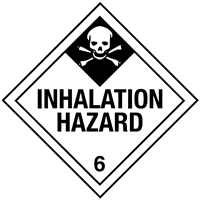
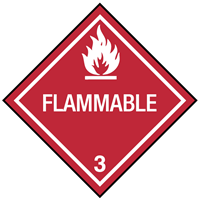
U.S. Department of Transportation hazard labels, and a general
description of the chemical. The information in CAMEO Chemicals comes
from a variety of
data sources.
| CAS Number | UN/NA Number | DOT Hazard Label | USCG CHRIS Code |
|---|---|---|---|
|
|
none | |
| NIOSH Pocket Guide | International Chem Safety Card | ||
| none | none | ||

NFPA 704
| Diamond | Hazard | Value | Description | |||||||||
|---|---|---|---|---|---|---|---|---|---|---|---|---|
|
 Health
|
4 | Can be lethal. | |||||||||
 Flammability
|
3 | Can be ignited under almost all ambient temperature conditions. | ||||||||||
 Instability
|
2 | Readily undergoes violent chemical changes at elevated temperatures and pressures. | ||||||||||
 Special
|
Note: NFPA ratings shown are for crotonaldehyde, CAS number 4170-30-3.
(NFPA, 2010)
General Description
Water-white to straw-colored liquid with a pungent, suffocating odor. Used as a chemical intermediate in a variety of industrial processes (surfactants, textiles, paper, fuels, insecticides, leather tanning, etc.). Used in chemical warfare. (EPA, 1998)
Hazards
)
The
Hazard fields
include
special hazard alerts
air and water
reactions, fire hazards, health hazards, a reactivity profile, and
details about
reactive groups assignments
and
potentially incompatible absorbents.
The information in CAMEO Chemicals comes from a variety of
data sources.
Reactivity Alerts
- Highly Flammable
- Polymerizable
Air & Water Reactions
Highly flammable.
Fire Hazard
Vapors form explosive mixtures in air or in sewers. Hazardous peroxides and acids emitted when heated to decomposition. Avoid nitric acid. Unstable, avoid oxygen, heat, elevated pressures. Hazardous polymerization may occur. Avoid contact with alkaline materials such as caustic ammonia or amines, or at elevated temperatures. (EPA, 1998)
Health Hazard
Although slightly less toxic, crotonaldehyde is similar chemically and toxicologically to acrolein, which is rated as extremely toxic. Toxic concentrations for human inhalation have been reported at 12 mg/m3/10 minutes. Irritant dose to human eye is 45 ppm. As with acrolein, vapor exposures cause severe and painful eye irritation, damage to cornea, lacrimation (tearing), irritation of nasal membranes, pulmonary edema (filling of lungs with fluid) and gastrointestinal distress when ingested. (EPA, 1998)
Reactivity Profile
(E)-CROTONALDEHYDE is an aldehyde. It can react violently with strong oxidizing reagents, e.g., reaction with conc. nitric acid leads to instantaneous ignition [Andrussow, L., Chim. Ind. (Paris), 1961, 86, p. 542]. In contact with strong acids or bases it will undergo an exothermic condensation reaction. Reaction with 1,3-butadiene is particularly violent [Greenlee, K. W., Chem. Eng. News, 1948, 26, p. 1985]. Crotonaldehyde may rapidly polymerize with ethyl acetoacetate (Soriano, D.S. et al. 1988. Journal of Chemical Education 65:637.).
Belongs to the Following Reactive Group(s)
Potentially Incompatible Absorbents
Use caution: Liquids with this reactive group classification have been known to react with the absorbents listed below. More info about absorbents, including situations to watch out for...
- Cellulose-Based Absorbents
- Mineral-Based & Clay-Based Absorbents
- Dirt/Earth
Response Recommendations
)
The
Response Recommendation fields
include isolation and evacuation distances, as well as recommendations for
firefighting, non-fire response, protective clothing, and first aid. The
information in CAMEO Chemicals comes from a variety of
data sources.
Isolation and Evacuation
Excerpt from ERG Guide 131  [Flammable Liquids - Toxic; polymerization hazard]:
IMMEDIATE PRECAUTIONARY MEASURE: Isolate spill or leak area for at least 50 meters (150 feet) in all directions.
SPILL: See ERG Table 1 - Initial Isolation and Protective Action Distances on the UN/NA 1143 datasheet.
FIRE: If tank, rail car or tank truck is involved in a fire, ISOLATE for 800 meters (1/2 mile) in all directions; also, consider initial evacuation for 800 meters (1/2 mile) in all directions. (ERG, 2020)
[Flammable Liquids - Toxic; polymerization hazard]:IMMEDIATE PRECAUTIONARY MEASURE: Isolate spill or leak area for at least 50 meters (150 feet) in all directions.
SPILL: See ERG Table 1 - Initial Isolation and Protective Action Distances on the UN/NA 1143 datasheet.
FIRE: If tank, rail car or tank truck is involved in a fire, ISOLATE for 800 meters (1/2 mile) in all directions; also, consider initial evacuation for 800 meters (1/2 mile) in all directions. (ERG, 2020)
Firefighting
All exposed skin surfaces should be covered. Wear protective clothing including self-contained breathing apparatus, coat, pants, gloves, boots, and bands around arms, wrists, legs, and waist. Massive or advanced fires should be fought from a safe distance or protected location. Isolate area for one-half mile in all directions if tank car or truck involved in fire.
Use dry chemical, foam, or carbon dioxide; water may be ineffective but should be used to keep fire-exposed containers cool. If leak or spill has not ignited, use water spray to disperse vapors. Water spray may be used to flush spills away from exposures. (EPA, 1998)
Use dry chemical, foam, or carbon dioxide; water may be ineffective but should be used to keep fire-exposed containers cool. If leak or spill has not ignited, use water spray to disperse vapors. Water spray may be used to flush spills away from exposures. (EPA, 1998)
Non-Fire Response
Remove all ignition sources and ventilate area of spill. No flares, smoking, or flames in hazard area. Do not touch spilled material; stop leak if you can do so without risk. (EPA, 1998)
Protective Clothing
For emergency situations, wear a positive pressure, pressure-demand, full facepiece self-contained breathing apparatus (SCBA) or pressure- demand supplied air respirator with escape SCBA and a fully-encapsulating, chemical resistant suit. (EPA, 1998)
DuPont Tychem® Suit Fabrics
)
Tychem® Fabric Legend
| QS = Tychem 2000 SFR |
| QC = Tychem 2000 |
| SL = Tychem 4000 |
| C3 = Tychem 5000 |
| TF = Tychem 6000 |
| TP = Tychem 6000 FR |
| RC = Tychem RESPONDER® CSM |
| TK = Tychem 10000 |
| RF = Tychem 10000 FR |
Testing Details
The fabric permeation data was generated for DuPont by a third party
laboratory. Permeation data for industrial chemicals is obtained per
ASTM F739. Normalized breakthrough times (the time at which the
permeation rate exceeds 0.1 μg/cm2/min) are reported in minutes. All
chemicals have been tested between approximately 20°C and 27°C unless
otherwise stated. All chemicals have been tested at a concentration of
greater than 95% unless otherwise stated.
Chemical warfare agents (Lewisite, Sarin, Soman, Sulfur Mustard, Tabun
and VX Nerve Agent) have been tested at 22°C and 50% relative humidity
per military standard MIL-STD-282. "Breakthrough time" for chemical
warfare agents is defined as the time when the cumulative mass which
permeated through the fabric exceeds the limit in MIL-STD-282 [either
1.25 or 4.0 μg/cm2].
A Caution from DuPont
This information is based upon technical data that DuPont believes to
be reliable on the date issued. It is subject to revision as additional
knowledge and experience are gained. The information reflects
laboratory performance of fabrics, not complete garments, under
controlled conditions. It is intended for informational use by persons
having technical skill for evaluation under their specific end-use
conditions, at their own discretion and risk. It is the user's
responsibility to determine the level of toxicity and the proper
personal protective equipment needed. Anyone intending to use this
information should first verify that the garment selected is suitable
for the intended use. In many cases, seams and closures have shorter
breakthrough times and higher permeation rates than the fabric. If
fabric becomes torn,abraded or punctured, or if seams or closures fail,
or if attached gloves, visors, etc. are damaged, end user should
discontinue use of garment to avoid potential exposure to chemical.
Since conditions of use are outside our control, DuPont makes no
warranties, express or implied, including, without limitation, no
warranties of merchantability or fitness for a particular use and
assume no liability in connection with any use of this information.
This information is not intended as a license to operate under or a
recommendation to infringe any patent, trademark or technical
information of DuPont or others covering any material or its use.
| Chemical | CAS Number | State | QS | QC | SL | C3 | TF | TP | RC | TK | RF |
|---|---|---|---|---|---|---|---|---|---|---|---|
| Butenal, 2- | 123-73-9 | Liquid | 34 | 147 | >480 | >480 | >480 | ||||
| Croton aldehyde | 123-73-9 | Liquid | 34 | 147 | >480 | >480 | >480 | ||||
| Ethane diol dipropanoate, 1,2- | 123-73-9 | Liquid | 34 | 147 | >480 | >480 | >480 | ||||
| Methyl acrolein | 123-73-9 | Liquid | 34 | 147 | >480 | >480 | >480 | ||||
| Propylene aldehyde | 123-73-9 | Liquid | 34 | 147 | >480 | >480 | >480 |
> indicates greater than.
Special Warning from DuPont: Tychem® and Tyvek® fabrics should not be used around heat, flames, sparks or in potentially flammable or explosive environments. Only...
)
...Tychem® ThermoPro, Tychem® Reflector® and Tychem® TK styles 600T/601T
(with aluminized outer suit) garments are designed and tested to help
reduce burn injury during escape from a flash fire. Users of Tychem®
ThermoPro, Tychem® Reflector® and Tychem® TK styles 600T/601T (with
aluminized outer suit) garments should not knowingly enter an explosive
environment. Tychem® garments with attached socks must be worn inside
protective outer footwear and are not suitable as outer footwear. These
attached socks do not have adequate durability or slip resistance to be
worn as the outer foot covering.
(DuPont, 2023)
First Aid
Warning: Crotonaldehyde, (E)- is an extreme eye, respiratory, and skin irritant and can cause corneal damage. Caution is advised.
Signs and Symptoms of Crotonaldehyde, (E)- Exposure: Signs and symptoms of acute exposure to crotonaldehyde, (E)- may include irritation of the eyes, skin, mucous membranes, nose, throat and upper respiratory tract. Delayed onset of pulmonary edema is possible following inhalation. Corneal damage may occur as may allergic contact dermatitis. Seizures may also be observed.
Emergency Life-Support Procedures: Acute exposure to crotonaldehyde, (E)- may require decontamination and life support for the victims. Emergency personnel should wear protective clothing appropriate to the type and degree of contami-nation. Air-purifying or supplied-air respiratory equipment should also be worn, as necessary. Rescue vehicles should carry supplies such as plastic sheeting and disposable plastic bags to assist in preventing spread of contamination.
Inhalation Exposure:
1. Move victims to fresh air. Emergency personnel should avoid self-exposure to crotonaldehyde, (E)-.
2. Evaluate vital signs including pulse and respiratory rate, and note any trauma. If no pulse is detected, provide CPR. If not breathing, provide artificial respiration. If breathing is labored, administer 100% humidified oxygen or other respiratory support.
3. Obtain authorization and/or further instructions from the local hospital for performance of other invasive procedures.
4. Transport to a health care facility.
Dermal/Eye Exposure:
1. Remove victims from exposure. Emergency personnel should avoid self-exposure to crotonaldehyde, (E)-.
2. Evaluate vital signs including pulse and respiratory rate, and note any trauma. If no pulse is detected, provide CPR. If not breathing, provide artificial respiration. If breathing is labored, administer 100% humidified oxygen or other respiratory support.
3. Remove contaminated clothing as soon as possible.
4. If eye exposure has occurred, eyes must be flushed with lukewarm water for at least 15 minutes.
5. Wash exposed skin areas thoroughly with soap and water.
6. Obtain authorization and/or further instructions from the local hospital for performance of other invasive procedures.
7. Transport to a health care facility.
Ingestion Exposure:
1. Evaluate vital signs including pulse and respiratory rate, and note any trauma. If no pulse is detected, provide CPR. If not breathing, provide artificial respiration. If breathing is labored, administer 100% humidified oxygen or other respiratory support.
2. Obtain authorization and/or further instructions from the local hospital for administration of an antidote or performance of other invasive procedures.
3. DO NOT induce vomiting.
4. Activated charcoal may be administered if victims are conscious and alert. Use 15 to 30 g (1/2 to 1 oz) for children, 50 to 100 g (1-3/4 to 3-1/2 oz) for adults, with 125 to 250 mL (1/2 to 1 cup) of water.
5. Promote excretion by administering a saline cathartic or sorbitol to conscious and alert victims. Children require 15 to 30 g (1/2 to 1 oz) of cathartic; 50 to 100 g (1-3/4 to 3-1/2 oz) is recommended for adults.
6. Transport to a health care facility. (EPA, 1998)
Signs and Symptoms of Crotonaldehyde, (E)- Exposure: Signs and symptoms of acute exposure to crotonaldehyde, (E)- may include irritation of the eyes, skin, mucous membranes, nose, throat and upper respiratory tract. Delayed onset of pulmonary edema is possible following inhalation. Corneal damage may occur as may allergic contact dermatitis. Seizures may also be observed.
Emergency Life-Support Procedures: Acute exposure to crotonaldehyde, (E)- may require decontamination and life support for the victims. Emergency personnel should wear protective clothing appropriate to the type and degree of contami-nation. Air-purifying or supplied-air respiratory equipment should also be worn, as necessary. Rescue vehicles should carry supplies such as plastic sheeting and disposable plastic bags to assist in preventing spread of contamination.
Inhalation Exposure:
1. Move victims to fresh air. Emergency personnel should avoid self-exposure to crotonaldehyde, (E)-.
2. Evaluate vital signs including pulse and respiratory rate, and note any trauma. If no pulse is detected, provide CPR. If not breathing, provide artificial respiration. If breathing is labored, administer 100% humidified oxygen or other respiratory support.
3. Obtain authorization and/or further instructions from the local hospital for performance of other invasive procedures.
4. Transport to a health care facility.
Dermal/Eye Exposure:
1. Remove victims from exposure. Emergency personnel should avoid self-exposure to crotonaldehyde, (E)-.
2. Evaluate vital signs including pulse and respiratory rate, and note any trauma. If no pulse is detected, provide CPR. If not breathing, provide artificial respiration. If breathing is labored, administer 100% humidified oxygen or other respiratory support.
3. Remove contaminated clothing as soon as possible.
4. If eye exposure has occurred, eyes must be flushed with lukewarm water for at least 15 minutes.
5. Wash exposed skin areas thoroughly with soap and water.
6. Obtain authorization and/or further instructions from the local hospital for performance of other invasive procedures.
7. Transport to a health care facility.
Ingestion Exposure:
1. Evaluate vital signs including pulse and respiratory rate, and note any trauma. If no pulse is detected, provide CPR. If not breathing, provide artificial respiration. If breathing is labored, administer 100% humidified oxygen or other respiratory support.
2. Obtain authorization and/or further instructions from the local hospital for administration of an antidote or performance of other invasive procedures.
3. DO NOT induce vomiting.
4. Activated charcoal may be administered if victims are conscious and alert. Use 15 to 30 g (1/2 to 1 oz) for children, 50 to 100 g (1-3/4 to 3-1/2 oz) for adults, with 125 to 250 mL (1/2 to 1 cup) of water.
5. Promote excretion by administering a saline cathartic or sorbitol to conscious and alert victims. Children require 15 to 30 g (1/2 to 1 oz) of cathartic; 50 to 100 g (1-3/4 to 3-1/2 oz) is recommended for adults.
6. Transport to a health care facility. (EPA, 1998)
Physical Properties
)
The
Physical Property fields
include properties such as vapor pressure and
boiling point, as well as explosive limits and
toxic exposure thresholds
The information in CAMEO Chemicals comes from a variety of
data sources.
Note: For Vapor Density and Specific Gravity, comparing the value to 1.0 can tell you if the chemical will likely sink/rise in air or sink/float in fresh water (respectively). Short phrases have been added to those values below as an aid. However, make sure to also consider the circumstances of a release. The Vapor Density comparisons are only valid when the gas escaping is at the same temperature as the surrounding air itself. If the chemical is escaping from a container where it was pressurized or refrigerated, it may first escape and behave as a heavy gas and sink in the air (even if it has a Vapor Density value less than 1). Also, the Specific Gravity comparisons are for fresh water (density 1.0 g/mL). If your spill is in salt water (density about 1.027 g/mL), you need to adjust the point of comparison. There are some chemicals that will sink in fresh water and float in salt water.
Note: For Vapor Density and Specific Gravity, comparing the value to 1.0 can tell you if the chemical will likely sink/rise in air or sink/float in fresh water (respectively). Short phrases have been added to those values below as an aid. However, make sure to also consider the circumstances of a release. The Vapor Density comparisons are only valid when the gas escaping is at the same temperature as the surrounding air itself. If the chemical is escaping from a container where it was pressurized or refrigerated, it may first escape and behave as a heavy gas and sink in the air (even if it has a Vapor Density value less than 1). Also, the Specific Gravity comparisons are for fresh water (density 1.0 g/mL). If your spill is in salt water (density about 1.027 g/mL), you need to adjust the point of comparison. There are some chemicals that will sink in fresh water and float in salt water.
| Chemical Formula: |
|
Flash Point:
55.4°F
(EPA, 1998)
Lower Explosive Limit (LEL):
2.1 %
(EPA, 1998)
Upper Explosive Limit (UEL):
15.5 %
(EPA, 1998)
Autoignition Temperature: data unavailable
Melting Point:
-101°F
(EPA, 1998)
Vapor Pressure:
19 mmHg
at 68°F
(EPA, 1998)
Vapor Density (Relative to Air):
2.41
(EPA, 1998)
- Heavier than air; will sink
Specific Gravity:
0.853
at 68°F
(EPA, 1998)
- Less dense than water; will float
Boiling Point:
219.2°F
at 760 mmHg
(EPA, 1998)
Molecular Weight:
70.1
(EPA, 1998)
Water Solubility: data unavailable
Ionization Energy/Potential: data unavailable
IDLH: data unavailable
AEGLs (Acute Exposure Guideline Levels)
| Exposure Period | AEGL-1 | AEGL-2 | AEGL-3 |
|---|---|---|---|
| 10 minutes | 0.19 ppm | 27 ppm | 44 ppm |
| 30 minutes | 0.19 ppm | 8.9 ppm | 27 ppm |
| 60 minutes | 0.19 ppm | 4.4 ppm | 14 ppm |
| 4 hours | 0.19 ppm | 1.1 ppm | 2.6 ppm |
| 8 hours | 0.19 ppm | 0.56 ppm | 1.5 ppm |
(NAC/NRC, 2023)
ERPGs (Emergency Response Planning Guidelines)
No ERPG information available.PACs (Protective Action Criteria)
| Chemical | PAC-1 | PAC-2 | PAC-3 |
|---|---|---|---|
| Crotonaldehyde, trans- (123-73-9) | 0.19 ppm | 4.4 ppm | 14 ppm |
(DOE, 2018)
Regulatory Information
)
The
Regulatory Information fields
include information from
the U.S. Environmental Protection Agency's Title III Consolidated List of
Lists,
the U.S. Cybersecurity and Infrastructure Security Agency's Chemical Facility
Anti-Terrorism Standards,
and the U.S. Occupational Safety and Health Administration's
Process Safety Management of Highly Hazardous Chemicals Standard List
(see more about these
data sources).
EPA Consolidated List of Lists
| Regulatory Name | CAS Number/ 313 Category Code |
EPCRA 302 EHS TPQ |
EPCRA 304 EHS RQ |
CERCLA RQ | EPCRA 313 TRI |
RCRA Code |
CAA 112(r) RMP TQ |
|---|---|---|---|---|---|---|---|
| 2-Butenal, (e)- | 123-73-9 | 1000 pounds | 100 pounds | 100 pounds | U053 | 20000 pounds | |
| Crotonaldehyde, (E)- | 123-73-9 | 1000 pounds | 100 pounds | 100 pounds | U053 | 20000 pounds |
(EPA List of Lists, 2022)
CISA Chemical Facility Anti-Terrorism Standards (CFATS)
| RELEASE | THEFT | SABOTAGE | ||||||||
|---|---|---|---|---|---|---|---|---|---|---|
| Chemical of Interest | CAS Number | Min Conc | STQ | Security Issue |
Min Conc | STQ | Security Issue |
Min Conc | STQ | Security Issue |
| Crotonaldehyde, (E)-; [2-Butenal], (E)-] | 123-73-9 | 1.00 % | 10000 pounds | flammable | ||||||
(CISA, 2007)
OSHA Process Safety Management (PSM) Standard List
No regulatory information available.Alternate Chemical Names
)
This section provides a listing of alternate names for this chemical,
including trade names and synonyms.
- BETA-METHYL ACROLEIN
- 2-BUTENAL(TRANS)
- 2-BUTENAL, (E)-
- 2-BUTENAL,(E)-
- CROTENALDEHYDE
- CROTONAL
- CROTONALDEHYDE
- CROTONALDEHYDE, (E)-
- CROTONALDEHYDE,(E)-
- CROTONIC ALDEHYDE
- (E)-2-BUTENAL
- 2(E)-BUTENAL
- (E)-CROTONALDEHYDE
- E-2-BUTENAL
- NCI-C56279
- PROPYLENE ALDEHYDE
- TOPANEL
- TOPANEL CA
- TRANS-2-BUTEN-1-AL
- TRANS-2-BUTENAL
- TRANS-CROTONAL
- TRANS-CROTONALDEHYDE

Web site owner:
Office of Response and Restoration ,
National Ocean Service,
National Oceanic and Atmospheric Administration.
USA.gov.
,
National Ocean Service,
National Oceanic and Atmospheric Administration.
USA.gov.
CAMEO Chemicals version 3.0.0.