
 Print
Print
Chemical Datasheet
ISOVALERALDEHYDE |
|
Chemical Identifiers
| CAS Number |
UN/NA Number |
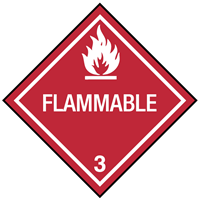
DOT Hazard Label |
USCG CHRIS Code |
- 590-86-3
|
|
|
|
| NIOSH Pocket Guide |
International Chem Safety Card |
|
none
|
|
NFPA 704
General Description
Colorless liquid with a weak suffocating odor. Floats on water. Produces an irritating vapor. (USCG, 1999)
Hazards
Reactivity Alerts
- Highly Flammable
- Polymerizable
- Peroxidizable Compound
Air & Water Reactions
Highly flammable.
Fire Hazard
Excerpt from 129

[Flammable Liquids (Water-Miscible / Noxious); polymerization hazard]:
HIGHLY FLAMMABLE: Will be easily ignited by heat, sparks or flames. Vapors may form explosive mixtures with air. Vapors may travel to source of ignition and flash back. Most vapors are heavier than air. They will spread along the ground and collect in low or confined areas (sewers, basements, tanks, etc.). Vapor explosion hazard indoors, outdoors or in sewers. Those substances designated with a (P) may polymerize explosively when heated or involved in a fire. Runoff to sewer may create fire or explosion hazard. Containers may explode when heated. Many liquids will float on water. (ERG, 2020)
Health Hazard
Inhalation causes chest discomfort, nausea, vomiting, and headache. Contact of liquid with eyes or skin causes irritation. Ingestion causes irritation of mouth and stomach. (USCG, 1999)
Reactivity Profile
ISOVALERALDEHYDE is an aldehyde. Aldehydes are frequently involved in self-condensation or polymerization reactions. These reactions are exothermic; they are often catalyzed by acid. Aldehydes are readily oxidized to give carboxylic acids. Flammable and/or toxic gases are generated by the combination of aldehydes with azo, diazo compounds, dithiocarbamates, nitrides, and strong reducing agents. Aldehydes can react with air to give first peroxo acids, and ultimately carboxylic acids. These autoxidation reactions are activated by light, catalyzed by salts of transition metals, and are autocatalytic (catalyzed by the products of the reaction). The addition of stabilizers (antioxidants) to shipments of aldehydes retards autoxidation.
Belongs to the Following Reactive Group(s)
Potentially Incompatible Absorbents
Use caution: Liquids with this reactive group classification have been
known to react with the
absorbent
listed below.
- Cellulose-Based Absorbents
Response Recommendations
Isolation and Evacuation
Excerpt from 129
[Flammable Liquids (Water-Miscible / Noxious); polymerization hazard]:
IMMEDIATE PRECAUTIONARY MEASURE: Isolate spill or leak area for at least 50 meters (150 feet) in all directions.
LARGE SPILL: Consider initial downwind evacuation for at least 300 meters (1000 feet).
FIRE: If tank, rail car or tank truck is involved in a fire, ISOLATE for 800 meters (1/2 mile) in all directions; also, consider initial evacuation for 800 meters (1/2 mile) in all directions. (ERG, 2020)
Firefighting
Fire Extinguishing Agents Not to Be Used: Water may be ineffective.
Fire Extinguishing Agents: Dry chemical, foam, carbon dioxide (USCG, 1999)
Non-Fire Response
Excerpt from 129
[Flammable Liquids (Water-Miscible / Noxious); polymerization hazard]:
ELIMINATE all ignition sources (no smoking, flares, sparks or flames) from immediate area. All equipment used when handling the product must be grounded. Do not touch or walk through spilled material. Stop leak if you can do it without risk. Prevent entry into waterways, sewers, basements or confined areas. A vapor-suppressing foam may be used to reduce vapors. Absorb or cover with dry earth, sand or other non-combustible material and transfer to containers. Use clean, non-sparking tools to collect absorbed material.
LARGE SPILL: Dike far ahead of liquid spill for later disposal. Water spray may reduce vapor, but may not prevent ignition in closed spaces. (ERG, 2020)
Protective Clothing
Goggles or face shield; rubber gloves; air mask or self-contained breathing apparatus for high vapor concentrations. (USCG, 1999)
DuPont Tychem® Suit Fabrics
No information available.
First Aid
INHALATION: remove victim to fresh air; apply artificial respiration if required; get medical attention.
EYES: flush with water for at least 15 min.
SKIN: wipe off, wash well with soap and water.
INGESTION: induce vomiting; get medical attention. (USCG, 1999)
Physical Properties
Flash Point:
55°F
(est.)
(USCG, 1999)
Lower Explosive Limit (LEL): data unavailable
Upper Explosive Limit (UEL): data unavailable
Autoignition Temperature: data unavailable
Melting Point:
-60°F
(USCG, 1999)
Vapor Pressure: data unavailable
Vapor Density (Relative to Air): data unavailable
Specific Gravity:
0.785
at 68°F
(USCG, 1999)
- Less dense than water; will float
Boiling Point:
198.5°F
at 760 mmHg
(USCG, 1999)
Molecular Weight:
86.1
(USCG, 1999)
Water Solubility: data unavailable
Ionization Energy/Potential: data unavailable
IDLH: data unavailable
AEGLs (Acute Exposure Guideline Levels)
No AEGL information available.
ERPGs (Emergency Response Planning Guidelines)
No ERPG information available.
PACs (Protective Action Criteria)
No PAC information available.
Regulatory Information
EPA Consolidated List of Lists
No regulatory information available.
CISA Chemical Facility Anti-Terrorism Standards (CFATS)
No regulatory information available.
OSHA Process Safety Management (PSM) Standard List
No regulatory information available.
Alternate Chemical Names
- ISOVALERAL
- ISOVALERALDEHYDE
- ISOVALERIC ALDEHYDE
- 3-METHYLBUTANAL
- 3-METHYLBUTYRALDEHYDE
 Health
 Flammability
 Instability
 Special