
 Print
Print
Chemical Datasheet
CHLOROSULFONIC ACID |
|
Chemical Identifiers
| CAS Number |
UN/NA Number |
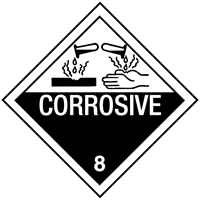
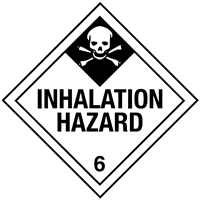
DOT Hazard Label |
USCG CHRIS Code |
- 7790-94-5
|
|
- Corrosive
- Poison Inhalation Hazard
|
|
| NIOSH Pocket Guide |
International Chem Safety Card |
|
none
|
|
NFPA 704
General Description
A colorless to yellow colored fuming liquid with a pungent odor. Density 14.7 lb / gal. Causes severe burns. Very toxic by inhalation. Corrosive to metals.
Hazards
Reactivity Alerts
- Strong Oxidizing Agent
- Known Catalytic Activity
- Water-Reactive
Air & Water Reactions
Fumes in air. Reacts exothermically and violently with water producing sulfuric acid, hydrochloric acid, and large quantities of dense white acid fumes [Merck, 11th ed., 1989]. Contact with water and metal produces explosive hydrogen gas (USCG, 1999).
Chlorosulfonic acid reacts vigorously with water to generate gaseous HCl. Based on a scenario where the chemical is spilled into an excess of water (at least 5 fold excess of water), half of the maximum theoretical yield of Hydrogen Chloride gas will be created in 0.04 minutes. Experimental details are in the following: "Development of the Table of Initial Isolation and Protective Distances for the 2008 Emergency Response Guidebook", ANL/DIS-09-2, D.F. Brown, H.M. Hartmann, W.A. Freeman, and W.D. Haney, Argonne National Laboratory, Argonne, Illinois, June 2009.
Fire Hazard
Special Hazards of Combustion Products: Decomposes into irritating and toxic gases
Behavior in Fire: Although nonflammable, it may ignite other combustibles. Contact with water AND metal produces explosive hydrogen gas. (USCG, 1999)
Health Hazard
INHALATION: vapor extremely irritating to lungs and mucous membranes. Vapor has such a sharp and pentrating odor that inhalation of severely toxic quantities is unlikely unless it is impossible to escape the fumes. CONTACT WITH EYES OR SKIN: liquid acid will severely burn body tissue. (USCG, 1999)
Reactivity Profile
CHLOROSULFONIC ACID is a strong oxidizing acid. Reacts violently with water, strong mineral acids and bases, alcohols, finely dispersed organic matter. Dangerously incompatible with combustible materials, nitrates, chlorates, metallic powders, carbides, picrates, and fulminates. Undergoes possibly violent reactions with acetic acid, acetic anhydride, acetonitrile, acrolein, acrylic acid, acrylonitrile, alkali, allyl alcohol, allyl chloride, ammonium hydroxide, aniline, butyraldehyde, cresol, cumene, diethyleneglycol methyl ether, diisopropyl ether, diphenyl ether, ethyl acetate, ethyl acrylate, ethylene chlorohydrin, ethylenediamine, ethylene glycol, glyoxal, hydrocarbons (hexane, heptane), hydrogen peroxide, isoprene, powdered metals, methyl ethyl ketone, propylene oxide, vinyl acetate. When heated to decomposition, it emits toxic fumes of hydrogen chloride and oxides of sulfur [Sax, 9th ed., 1996, p. 831]. Reaction with phosphorus accelerates out of control and culminates in an explosion [Heumann, K. et al., Ber., 1882, 15, p. 417]. Mixing chlorosulfuric acid and 98% sulfuric acid may evolve HCl [Subref: Anon, Loss Prev. Bull. 1977, (013), 2-3].
Belongs to the Following Reactive Group(s)
- Acids, Strong Oxidizing
- Acyl Halides, Sulfonyl Halides, and Chloroformates
Potentially Incompatible Absorbents
Use caution: Liquids with this reactive group classification have been
known to react with the
absorbents
listed below.
- Cellulose-Based Absorbents
- Mineral-Based & Clay-Based Absorbents
- Expanded Polymeric Absorbents
- Dirt/Earth
Response Recommendations
Isolation and Evacuation
Excerpt from 137

[Substances - Water-Reactive - Corrosive]:
IMMEDIATE PRECAUTIONARY MEASURE: Isolate spill or leak area in all directions for at least 50 meters (150 feet) for liquids and at least 25 meters (75 feet) for solids.
SPILL: See ERG Table 1 - Initial Isolation and Protective Action Distances on the UN/NA 1754 datasheet.
FIRE: If tank, rail car or tank truck is involved in a fire, ISOLATE for 800 meters (1/2 mile) in all directions; also, consider initial evacuation for 800 meters (1/2 mile) in all directions. (ERG, 2020)
Firefighting
Excerpt from 137
[Substances - Water-Reactive - Corrosive]:
When material is not involved in fire, do not use water on material itself.
SMALL FIRE: Dry chemical or CO2. If it can be done safely, move undamaged containers away from the area around the fire.
LARGE FIRE: Flood fire area with large quantities of water, while knocking down vapors with water fog. If insufficient water supply, responders should withdraw.
FIRE INVOLVING TANKS OR CAR/TRAILER LOADS: Cool containers with flooding quantities of water until well after fire is out. Do not get water inside containers. Withdraw immediately in case of rising sound from venting safety devices or discoloration of tank. ALWAYS stay away from tanks engulfed in fire. (ERG, 2020)
Non-Fire Response
Excerpt from 137
[Substances - Water-Reactive - Corrosive]:
Do not touch damaged containers or spilled material unless wearing appropriate protective clothing. Stop leak if you can do it without risk. Use water spray to reduce vapors; do not put water directly on leak, spill area or inside container. Keep combustibles (wood, paper, oil, etc.) away from spilled material.
SMALL SPILL: Cover with DRY earth, DRY sand or other non-combustible material followed with plastic sheet to minimize spreading or contact with rain. Use clean, non-sparking tools to collect material and place it into loosely covered plastic containers for later disposal. Prevent entry into waterways, sewers, basements or confined areas. (ERG, 2020)
Protective Clothing
Acid-proof goggles or a rubber hood, long rubber gloves, rubber shoes, long rubber apron, shirt and trousers of wool or acrylic fiber, and a hat with a brim. For emergency use involving considerable exposure, a complete rubber suit with hood, gloves and boots of rubber should be used. In case of fire use self-contained breathing apparatus. (USCG, 1999)
DuPont Tychem® Suit Fabrics
Normalized Breakthrough Times (in Minutes)
| Chemical |
CAS Number |
State |
QS |
QC |
SL |
C3 |
TF |
TP |
RC |
TK |
RF |
| Chlorosulfonic acid |
7790-94-5 |
Liquid |
41 |
|
>480 |
330 |
>480 |
17 |
>480 |
>480 |
180 |
| Chlorsulfonic acid |
7790-94-5 |
Liquid |
41 |
|
>480 |
330 |
>480 |
17 |
>480 |
>480 |
180 |
Special Warning from DuPont: Tychem® and Tyvek® fabrics should not be
used around heat, flames, sparks or in potentially flammable or
explosive environments. Only...
(DuPont, 2023)
First Aid
Call a physician in all cases.
INHALATION: remove victim to fresh air; if he is not breathing, apply artificial respiration; give oxygen if breathing is difficult; do NOT induce vomiting.
SKIN: flush with plenty of water for at least 15 min. while removing contaminated clothing and shoes. (USCG, 1999)
Physical Properties
Flash Point: data unavailable
Lower Explosive Limit (LEL): data unavailable
Upper Explosive Limit (UEL): data unavailable
Autoignition Temperature:
Not flammable
(USCG, 1999)
Melting Point:
-112°F
(USCG, 1999)
Vapor Pressure:
1.55 mmHg
(USCG, 1999)
Vapor Density (Relative to Air): data unavailable
Specific Gravity:
1.75
at 68°F
(USCG, 1999)
- Denser than water; will sink
Boiling Point:
311°F
at 760 mmHg
(USCG, 1999)
Molecular Weight:
116.53
(USCG, 1999)
Water Solubility: data unavailable
Ionization Energy/Potential: data unavailable
IDLH: data unavailable
AEGLs (Acute Exposure Guideline Levels)
Interim AEGLs for Chlorosulfonic acid (7790-94-5)
| Exposure Period |
AEGL-1 |
AEGL-2 |
AEGL-3 |
| 10 minutes |
0.1 mg/m3 |
4.4 mg/m3 |
45 mg/m3 |
| 30 minutes |
0.1 mg/m3 |
4.4 mg/m3 |
31 mg/m3 |
| 60 minutes |
0.1 mg/m3 |
4.4 mg/m3 |
25 mg/m3 |
| 4 hours |
0.1 mg/m3 |
4.4 mg/m3 |
6.1 mg/m3 |
| 8 hours |
0.1 mg/m3 |
4.4 mg/m3 |
6.1 mg/m3 |
(NAC/NRC, 2023)
ERPGs (Emergency Response Planning Guidelines)
| Chemical |
ERPG-1 |
ERPG-2 |
ERPG-3 |
| Chlorosulfonic Acid (7790-94-5)
|
2 mg/m3  |
10 mg/m3 |
30 mg/m3 |
(AIHA, 2022)
PACs (Protective Action Criteria)
| Chemical |
PAC-1 |
PAC-2 |
PAC-3 |
| Chlorosulfonic acid; (Chlorosulfuric acid) (7790-94-5)
|
0.1 mg/m3 |
4.4 mg/m3 |
25 mg/m3 |
(DOE, 2018)
Regulatory Information
EPA Consolidated List of Lists
| Regulatory Name |
CAS Number/
313 Category Code |
EPCRA 302
EHS TPQ |
EPCRA 304
EHS RQ |
CERCLA RQ |
EPCRA 313
TRI |
RCRA
Code |
CAA 112(r)
RMP TQ |
| Chlorosulfonic acid |
7790-94-5 |
|
|
1000 pounds |
|
|
|
(EPA List of Lists, 2022)
CISA Chemical Facility Anti-Terrorism Standards (CFATS)
|
RELEASE |
THEFT |
SABOTAGE |
| Chemical of Interest |
CAS Number |
Min Conc |
STQ |
Security
Issue |
Min Conc |
STQ |
Security
Issue |
Min Conc |
STQ |
Security
Issue |
| Chlorosulfonic acid |
7790-94-5 |
|
|
|
|
|
|
ACG |
APA |
sabotage/ contamination |
(CISA, 2007)
OSHA Process Safety Management (PSM) Standard List
No regulatory information available.
Alternate Chemical Names
- CHLOROSULFONIC ACID
- CHLOROSULFURIC ACID
- CHLOROSULPHONIC ACID
- CHLORSULFONIC ACID
- MONOCHLOROSULFONIC ACID
- MONOCHLOROSULFURIC ACID
- SULFURIC ACID CHLOROHYDRIN
- SULFURIC CHLORHYDRIN
- SULFURIC CHLOROHYDRIN
 Health
 Flammability
 Instability
 Special