
 Print
Print
Chemical Datasheet
Chemical Identifiers
| CAS Number |
UN/NA Number |
DOT Hazard Label |
USCG CHRIS Code |
- 302-01-2

|
|
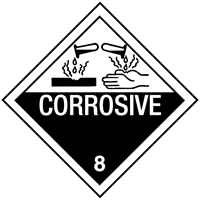
- Corrosive
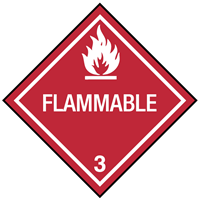
- Flammable Liquid
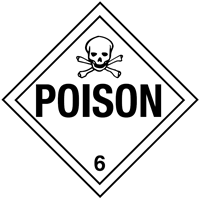
- Poison
|
|
| NIOSH Pocket Guide |
International Chem Safety Card |
|
Hydrazine
|
|
NFPA 704
General Description
A colorless, fuming oily liquid with an ammonia-like odor. Flash point 99°F. Explodes during distillation if traces of air are present. Toxic by inhalation and by skin absorption. Corrosive to tissue. Produces toxic oxides of nitrogen during combustion. Used as a rocket propellant and in fuel cells.
Hazards
Reactivity Alerts
- Highly Flammable
- Strong Reducing Agent
- Air-Reactive
Air & Water Reactions
Fumes in air. Highly flammable. Can self-ignite at low temperatures if in contact with a catalyst (example: autoignition temperature is 74°F in contact with rust). May ignite spontaneously while absorbed on porous materials such as earth, asbestos, cloth, or wood unless the heat of the continual hydrazine-air reaction has a chance to dissipate [Haz. Chem. Data(1966)]. Water soluble.
Fire Hazard
It is a flammable/combustible material and may be ignited by heat, sparks, or flames. Vapor may travel to a source of ignition and flash back. Container may explode in heat of fire. Vapor explosion and poison hazard indoors, outdoors, or in sewers. Runoff to sewer may create fire or explosion hazard. Vapors form explosive mixtures with air. May continue to burn in the absence of air. Decomposition gives off toxic nitrogen compound fumes. Can catch fire when in contact with porous materials such as wood, asbestos, cloth, earth, and rusty metals. Incompatible with oxidizers, hydrogen peroxide, nitric acid, metal oxides, and strong acids. Hazardous polymerization may not occur. (EPA, 1998)
Health Hazard
Target organs affected include central nervous system; respiratory system; skin and eyes. Chronic exposure in humans may cause pneumonia, liver and kidney damage. Liver damage may be more severe than kidney damage. It is a suspected human carcinogen. (EPA, 1998)
Reactivity Profile
HYDRAZINE is a powerful reducing agent. May ignite spontaneously if mixed with hydrogen peroxide or with nitric acid. Decomposes with flame on contact with many metallic oxide surfaces [Haz. Chem. Data(1966)]. While boiling a piece of polyester fiber in hydrazine in a glass beaker, a technician put a somewhat rusty pair of metal tweezers into the hydrazine, which then ignited [MCA Case History 1893 (1973)]. Forms explosive metal hydrazides when mixed with alkali metals in presence of ammonia [Mellor 8, Supp. 2:95(1967)]. During the measurement of the shock sensitivity of a mixture containing hydrazine, a drop of the mixture fell on a tetryl explosive. The tetryl immediately burst into flames [ASESB 105]. Ignites spontaneously if mixed with nitrous oxide [Mellor 8, Supp. 2:214(1967)]. Reacts explosively with potassium and sodium dichromate [Mellor 11:234(1946-1947)].
Belongs to the Following Reactive Group(s)
- Azo, Diazo, Azido, Hydrazine, and Azide Compounds
- Bases, Strong
Potentially Incompatible Absorbents
Use caution: Liquids with this reactive group classification have been
known to react with the
absorbents
listed below.
- Cellulose-Based Absorbents
- Mineral-Based & Clay-Based Absorbents
Response Recommendations
Isolation and Evacuation
Excerpt from 132

[Flammable Liquids - Corrosive]:
IMMEDIATE PRECAUTIONARY MEASURE: Isolate spill or leak area for at least 50 meters (150 feet) in all directions.
SPILL: Increase the immediate precautionary measure distance, in the downwind direction, as necessary.
FIRE: If tank, rail car or tank truck is involved in a fire, ISOLATE for 800 meters (1/2 mile) in all directions; also, consider initial evacuation for 800 meters (1/2 mile) in all directions. (ERG, 2020)
Firefighting
Stay upwind; keep out of low areas. Wear positive pressure breathing apparatus and protective clothing. Isolate for one-half mile in all directions if tank car or truck is involved in fire. Move container from fire area if you can do so without risk. Dike fire control water for later disposal; do not scatter material. Spray cooling water on containers that are exposed to flames until well after fire is out.
Small fires: dry chemical, carbon dioxide, water spray or foam. Large fires: water spray, fog, or foam. (EPA, 1998)
Non-Fire Response
Excerpt from 132
[Flammable Liquids - Corrosive]:
ELIMINATE all ignition sources (no smoking, flares, sparks or flames) from immediate area. All equipment used when handling the product must be grounded. Do not touch or walk through spilled material. Stop leak if you can do it without risk. Prevent entry into waterways, sewers, basements or confined areas. A vapor-suppressing foam may be used to reduce vapors. Absorb with earth, sand or other non-combustible material. For hydrazine, absorb with DRY sand or inert absorbent (vermiculite or absorbent pads). Use clean, non-sparking tools to collect absorbed material.
LARGE SPILL: Dike far ahead of liquid spill for later disposal. Water spray may reduce vapor, but may not prevent ignition in closed spaces. (ERG, 2020)
Protective Clothing
Excerpt from NIOSH Pocket Guide for Hydrazine:
Skin: PREVENT SKIN CONTACT - Wear appropriate personal protective clothing to prevent skin contact.
Eyes: PREVENT EYE CONTACT - Wear appropriate eye protection to prevent eye contact.
Wash skin: WHEN CONTAMINATED - The worker should immediately wash the skin when it becomes contaminated.
Remove: WHEN WET (FLAMMABLE) - Work clothing that becomes wet should be immediately removed due to its flammability hazard (i.e., for liquids with a flash point <100°F).
Change: No recommendation is made specifying the need for the worker to change clothing after the workshift.
Provide:
• EYEWASH - Eyewash fountains should be provided in areas where there is any possibility that workers could be exposed to the substances; this is irrespective of the recommendation involving the wearing of eye protection.
• QUICK DRENCH - Facilities for quickly drenching the body should be provided within the immediate work area for emergency use where there is a possibility of exposure. [Note: It is intended that these facilities provide a sufficient quantity or flow of water to quickly remove the substance from any body areas likely to be exposed. The actual determination of what constitutes an adequate quick drench facility depends on the specific circumstances. In certain instances, a deluge shower should be readily available, whereas in others, the availability of water from a sink or hose could be considered adequate.] (NIOSH, 2023)
DuPont Tychem® Suit Fabrics
Normalized Breakthrough Times (in Minutes)
| Chemical |
CAS Number |
State |
QS |
QC |
SL |
C3 |
TF |
TP |
RC |
TK |
RF |
| Hydrazine |
302-01-2 |
Liquid |
|
|
>480 |
|
283 |
283 |
>480 |
>480 |
>480 |
Special Warning from DuPont: Tychem® and Tyvek® fabrics should not be
used around heat, flames, sparks or in potentially flammable or
explosive environments. Only...
(DuPont, 2023)
First Aid
Warning: Effects may be delayed for hours to days. Caution is advised.
Signs and Symptoms of Acute Hydrazine Exposure: Signs and symptoms of acute exposure to hydrazine may include severe eye irritation, facial numbness, facial swelling, and increased salivation. Hydrazine vapor may immediately irritate the nose and throat. Headache, twitching, seizures, convulsions, and coma may also occur. Gastrointestinal signs and symptoms include anorexia, nausea, and vomiting. Pulmonary edema and hypotension (low blood pressure) are common. Hydrazine is toxic to the liver, ruptures red blood cells, and may cause kidney damage. Dermal contact may result in irritation or severe burns.
Emergency Life-Support Procedures: Acute exposure to hydrazine may require decontamination and life support for the victims. Emergency personnel should wear protective clothing appropriate to the type and degree of contamination. Air-purifying or supplied-air respiratory equipment should also be worn, as necessary. Rescue vehicles should carry supplies such as plastic sheeting and disposable plastic bags to assist in preventing spread of contamination.
Inhalation Exposure:
1. Move victims to fresh air. Emergency personnel should avoid self-exposure to hydrazine.
2. Evaluate vital signs including pulse and respiratory rate, and note any trauma. If no pulse is detected, provide CPR. If not breathing, provide artificial respiration. If breathing is labored, administer oxygen or other respiratory support.
3. Obtain authorization and/or further instructions from the local hospital for administration of an antidote or performance of other invasive procedures.
4. Transport to a health care facility.
Dermal/Eye Exposure:
1. Remove victims from exposure. Emergency personnel should avoid self- exposure to hydrazine.
2. Evaluate vital signs including pulse and respiratory rate, and note any trauma. If no pulse is detected, provide CPR. If not breathing, provide artificial respiration. If breathing is labored, administer oxygen or other respiratory support.
3. Remove contaminated clothing as soon as possible.
4. If eye exposure has occurred, eyes must be flushed with lukewarm water for at least 15 minutes.
5. Wash exposed skin areas THOROUGHLY with soap and water.
6. Obtain authorization and/or further instructions from the local hospital for administration of an antidote or performance of other invasive procedures.
7. Transport to a health care facility.
Ingestion Exposure:
1. Evaluate vital signs including pulse and respiratory rate, and note any trauma. If no pulse is detected, provide CPR. If not breathing, provide artificial respiration. If breathing is labored, administer oxygen or other respiratory support.
2. Obtain authorization and/or further instructions from the local hospital for administration of an antidote or performance of other invasive procedures.
3. Give the victims water or milk: children up to 1 year old, 125 mL (4 oz or 1/2 cup); children 1 to 12 years old, 200 mL (6 oz or 3/4 cup); adults 250 mL (8 oz or 1 cup). Water or milk should be given only if victims are conscious and alert.
4. Activated charcoal may be administered if victims are conscious and alert. Use 15 to 30 g (1/2 to 1 oz) for children, 50 to 100 g (1-3/4 to 3-1/2 oz) for adults, with 125 to 250 mL (1/2 to 1 cup) of water.
5. Promote excretion by administering a saline cathartic or sorbitol to conscious and alert victims. Children require 15 to 30 g (1/2 to 1 oz) of cathartic; 50 to 100 g (1-3/4 to 3-1/2 oz) is recommended for adults.
6. Transport to a health care facility. (EPA, 1998)
Physical Properties
Flash Point:
125.6°F
(EPA, 1998)
Lower Explosive Limit (LEL):
4.7 %
(EPA, 1998)
Upper Explosive Limit (UEL):
100 %
(EPA, 1998)
Autoignition Temperature:
518°F
(USCG, 1999)
Melting Point:
36°F
(EPA, 1998)
Vapor Pressure:
14.4 mmHg
at 77°F
(EPA, 1998)
Vapor Density (Relative to Air): data unavailable
Specific Gravity:
1.011
at 59°F
(EPA, 1998)
- Denser than water; will sink
Boiling Point:
236.3°F
at 760 mmHg
(EPA, 1998)
Molecular Weight:
32.05
(EPA, 1998)
Water Solubility:
Miscible
(NIOSH, 2023)
Ionization Energy/Potential:
8.93 eV
(NIOSH, 2023)
IDLH:
50 ppm
; A potential occupational carcinogen.
(NIOSH, 2023)
AEGLs (Acute Exposure Guideline Levels)
Final AEGLs for Hydrazine (302-01-2)
| Exposure Period |
AEGL-1 |
AEGL-2 |
AEGL-3 |
| 10 minutes |
0.1 ppm |
23 ppm |
64 ppm |
| 30 minutes |
0.1 ppm |
16 ppm |
45 ppm |
| 60 minutes |
0.1 ppm |
13 ppm |
35 ppm |
| 4 hours |
0.1 ppm |
3.1 ppm |
8.9 ppm |
| 8 hours |
0.1 ppm |
1.6 ppm |
4.4 ppm |
(NAC/NRC, 2023)
ERPGs (Emergency Response Planning Guidelines)
| Chemical |
ERPG-1 |
ERPG-2 |
ERPG-3 |
| Hydrazine (302-01-2)
|
0.5 ppm |
5 ppm |
30 ppm |
(AIHA, 2022)
PACs (Protective Action Criteria)
| Chemical |
PAC-1 |
PAC-2 |
PAC-3 |
|
| Hydrazine (302-01-2)
|
0.1 ppm |
13 ppm |
35 ppm |
LEL = 29000 ppm |
(DOE, 2018)
Regulatory Information
EPA Consolidated List of Lists
| Regulatory Name |
CAS Number/
313 Category Code |
EPCRA 302
EHS TPQ |
EPCRA 304
EHS RQ |
CERCLA RQ |
EPCRA 313
TRI |
RCRA
Code |
CAA 112(r)
RMP TQ |
| Hydrazine |
302-01-2 |
1000 pounds |
1 pound |
1 pound |
313 |
U133 |
15000 pounds |
(EPA List of Lists, 2022)
CISA Chemical Facility Anti-Terrorism Standards (CFATS)
|
RELEASE |
THEFT |
SABOTAGE |
| Chemical of Interest |
CAS Number |
Min Conc |
STQ |
Security
Issue |
Min Conc |
STQ |
Security
Issue |
Min Conc |
STQ |
Security
Issue |
| Hydrazine |
302-01-2 |
1.00 % |
10000 pounds |
flammable |
|
|
|
|
|
|
(CISA, 2007)
OSHA Process Safety Management (PSM) Standard List
No regulatory information available.
Alternate Chemical Names
- DIAMINE
- HYDRAZINE
- HYDRAZINE (ANHYDROUS)
- HYDRAZINE ANHYDROUS
- HYDRAZINE AQUEOUS SOLUTION
- HYDRAZINE BASE
- HYDRAZINE, (ANHYDROUS)
- HYDRAZINE, ANHYDROUS
- HYDRAZINE, [ANHYDROUS]
- LEVOXINE
- NITROGEN HYDRIDE (N2H4)
- OXYTREAT 35
 Health
 Flammability
 Instability
 Special