
 Print
Print
Chemical Datasheet
COPPER CHLORIDE |
|
Chemical Identifiers
| CAS Number |
UN/NA Number |
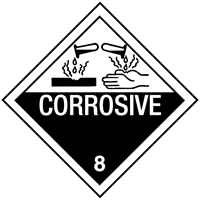
DOT Hazard Label |
USCG CHRIS Code |
|
|
|
|
|
| NIOSH Pocket Guide |
International Chem Safety Card |
|
none
|
none
|
NFPA 704
data unavailable
General Description
A yellowish-brown powder (the anhydrous form) or a green crystalline solid (the dihydrate). Noncombustible but hydrogen chloride gas may form when heated in a fire. Corrosive to aluminum. Used to manufacture other chemicals, in dyeing, in printing, in fungicides, as a wood preservative.
Hazards
Reactivity Alerts
none
Air & Water Reactions
The anhydrous form is hygroscopic, forming the dihydrate. The dihydrate is deliquescent in moist air, efflorescent in dry air. Both are water soluble. May corrode metals in the presence of moisture; the reaction is not hazardous (USCG, 1999).
Fire Hazard
Special Hazards of Combustion Products: Irritating hydrogen chloride gas may form in fire. (USCG, 1999)
Health Hazard
Inhalation causes coughing and sneezing. Ingestion causes pain and vomiting. Contact with solutions irritates eyes; contact with solid causes severe eye surface injury and skin irritation. (USCG, 1999)
Reactivity Profile
Solutions of COPPER CHLORIDE are acidic (they contain moderate concentrations of hydrogen ions and have pH's of less than 7.0). They react as acids to neutralize bases. These neutralizations generate heat, but far less than is generated by neutralization of inorganic acids, inorganic oxoacids, and carboxylic acid.
Belongs to the Following Reactive Group(s)
Potentially Incompatible Absorbents
No information available.
Response Recommendations
Isolation and Evacuation
Excerpt from 154

[Substances - Toxic and/or Corrosive (Non-Combustible)]:
IMMEDIATE PRECAUTIONARY MEASURE: Isolate spill or leak area in all directions for at least 50 meters (150 feet) for liquids and at least 25 meters (75 feet) for solids.
SPILL: Increase the immediate precautionary measure distance, in the downwind direction, as necessary.
FIRE: If tank, rail car or tank truck is involved in a fire, ISOLATE for 800 meters (1/2 mile) in all directions; also, consider initial evacuation for 800 meters (1/2 mile) in all directions. (ERG, 2020)
Firefighting
Excerpt from 154
[Substances - Toxic and/or Corrosive (Non-Combustible)]:
SMALL FIRE: Dry chemical, CO2 or water spray.
LARGE FIRE: Dry chemical, CO2, alcohol-resistant foam or water spray. If it can be done safely, move undamaged containers away from the area around the fire. Dike runoff from fire control for later disposal.
FIRE INVOLVING TANKS OR CAR/TRAILER LOADS: Fight fire from maximum distance or use unmanned master stream devices or monitor nozzles. Do not get water inside containers. Cool containers with flooding quantities of water until well after fire is out. Withdraw immediately in case of rising sound from venting safety devices or discoloration of tank. ALWAYS stay away from tanks engulfed in fire. (ERG, 2020)
Non-Fire Response
Excerpt from 154
[Substances - Toxic and/or Corrosive (Non-Combustible)]:
ELIMINATE all ignition sources (no smoking, flares, sparks or flames) from immediate area. Do not touch damaged containers or spilled material unless wearing appropriate protective clothing. Stop leak if you can do it without risk. Prevent entry into waterways, sewers, basements or confined areas. Absorb or cover with dry earth, sand or other non-combustible material and transfer to containers. DO NOT GET WATER INSIDE CONTAINERS. (ERG, 2020)
Protective Clothing
Bu. Mines approved respirator; rubber gloves; safety goggles (USCG, 1999)
DuPont Tychem® Suit Fabrics
No information available.
First Aid
INHALATION: move to fresh air.
INGESTION: give large amounts of water; induce vomiting; get medical attention.
EYES: flush with water for 15 min.; consult a doctor if injury was caused by solid.
SKIN: flush with water. (USCG, 1999)
Physical Properties
Flash Point: data unavailable
Lower Explosive Limit (LEL): data unavailable
Upper Explosive Limit (UEL): data unavailable
Autoignition Temperature: data unavailable
Melting Point: data unavailable
Vapor Pressure: data unavailable
Vapor Density (Relative to Air): data unavailable
Specific Gravity:
2.54
at 68°F
(USCG, 1999)
- Denser than water; will sink
Boiling Point: data unavailable
Molecular Weight:
170.48
(dihydrate)
(USCG, 1999)
Water Solubility: data unavailable
Ionization Energy/Potential: data unavailable
IDLH: data unavailable
AEGLs (Acute Exposure Guideline Levels)
No AEGL information available.
ERPGs (Emergency Response Planning Guidelines)
No ERPG information available.
PACs (Protective Action Criteria)
| Chemical |
PAC-1 |
PAC-2 |
PAC-3 |
| Copper(II) chloride (1:2); (Cupric chloride) (7447-39-4)
|
6.3 mg/m3 |
69 mg/m3 |
420 mg/m3 |
(DOE, 2018)
Regulatory Information
EPA Consolidated List of Lists
| Regulatory Name |
CAS Number/
313 Category Code |
EPCRA 302
EHS TPQ |
EPCRA 304
EHS RQ |
CERCLA RQ |
EPCRA 313
TRI |
RCRA
Code |
CAA 112(r)
RMP TQ |
| Copper Compounds |
N100 |
|
|
& |
313 |
|
|
| Cupric chloride |
7447-39-4 |
|
|
10 pounds |
313c |
|
|
(EPA List of Lists, 2022)
CISA Chemical Facility Anti-Terrorism Standards (CFATS)
No regulatory information available.
OSHA Process Safety Management (PSM) Standard List
No regulatory information available.
Alternate Chemical Names
- COPPER BICHLORIDE
- COPPER CHLORIDE
- COPPER DICHLORIDE
- COPPER(2+) CHLORIDE
- COPPER(II) CHLORIDE
- CUPRIC CHLORIDE
- CUPRIC CHLORIDE DIHYDRATE
- CUPRIC DICHLORIDE
- ERIOCHOLCITE (ANHYDROUS)