
 Print
Print
Chemical Datasheet
BUTYL BUTYRATE |
|
Chemical Identifiers
| CAS Number |
UN/NA Number |
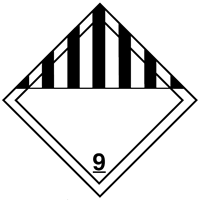
DOT Hazard Label |
USCG CHRIS Code |
- 109-21-7

|
|
|
|
| NIOSH Pocket Guide |
International Chem Safety Card |
|
none
|
none
|
NFPA 704
General Description
A colorless liquid. Insoluble in water. A marine pollutant. Poses a threat to the aquatic environment. Immediate steps should be taken to prevent spread to the environment. May penetrate soils and contaminate groundwater and nearby waterways. Mildly irritates the eyes and skin.
Hazards
Reactivity Alerts
none
Air & Water Reactions
Insoluble in water.
Fire Hazard
Excerpt from 171

[Substances (Low to Moderate Hazard)]:
Some may burn but none ignite readily. Containers may explode when heated. Some may be transported hot. For UN3508, Capacitor, asymmetric, be aware of possible short circuiting as this product is transported in a charged state. Polymeric beads, expandable (UN2211) may evolve flammable vapours. (ERG, 2020)
Health Hazard
Inhalation or ingestion causes headache, dizziness, nausea, vomiting, and narcosis. Contact with liquid irritates eyes. (USCG, 1999)
Reactivity Profile
BUTYL BUTYRATE reacts with acids to liberate heat along with butyl alcohol and butyric acid. Strong oxidizing acids may cause a vigorous reaction that is sufficiently exothermic to ignite the reaction products. Heat is also generated by interaction with caustic solutions. Flammable hydrogen is generated by mixing with alkali metals and hydrides. May attack some forms of plastics (USCG, 1999).
Belongs to the Following Reactive Group(s)
- Esters, Sulfate Esters, Phosphate Esters, Thiophosphate Esters, and Borate Esters
Potentially Incompatible Absorbents
No information available.
Response Recommendations
Isolation and Evacuation
Excerpt from 171
[Substances (Low to Moderate Hazard)]:
IMMEDIATE PRECAUTIONARY MEASURE: Isolate spill or leak area in all directions for at least 50 meters (150 feet) for liquids and at least 25 meters (75 feet) for solids.
SPILL: Increase the immediate precautionary measure distance, in the downwind direction, as necessary.
FIRE: If tank, rail car or tank truck is involved in a fire, ISOLATE for 800 meters (1/2 mile) in all directions; also, consider initial evacuation for 800 meters (1/2 mile) in all directions. (ERG, 2020)
Firefighting
Excerpt from 171
[Substances (Low to Moderate Hazard)]:
SMALL FIRE: Dry chemical, CO2, water spray or regular foam.
LARGE FIRE: Water spray, fog or regular foam. Do not scatter spilled material with high-pressure water streams. If it can be done safely, move undamaged containers away from the area around the fire. Dike runoff from fire control for later disposal.
FIRE INVOLVING TANKS: Cool containers with flooding quantities of water until well after fire is out. Withdraw immediately in case of rising sound from venting safety devices or discoloration of tank. ALWAYS stay away from tanks engulfed in fire. (ERG, 2020)
Non-Fire Response
Excerpt from 171
[Substances (Low to Moderate Hazard)]:
Do not touch or walk through spilled material. Stop leak if you can do it without risk. Prevent dust cloud. For Asbestos, avoid inhalation of dust. Cover spill with plastic sheet or tarp to minimize spreading. Do not clean up or dispose of, except under supervision of a specialist.
SMALL DRY SPILL: With clean shovel, place material into clean, dry container and cover loosely; move containers from spill area.
SMALL SPILL: Pick up with sand or other non-combustible absorbent material and place into containers for later disposal.
LARGE SPILL: Dike far ahead of liquid spill for later disposal. Cover powder spill with plastic sheet or tarp to minimize spreading. Prevent entry into waterways, sewers, basements or confined areas. (ERG, 2020)
Protective Clothing
All-purpose canister mask or chemical cartridge respirator; glass or face (USCG, 1999)
DuPont Tychem® Suit Fabrics
No information available.
First Aid
INHALATION: Move victim to fresh air and call a physician; give artificial respiration if necessary.
INGESTION: Induce vomiting and call a physician.
EYES: Flush with water for at least 15 minutes.
SKIN: Flush with water; wash with soap and water. (USCG, 1999)
Physical Properties
Flash Point:
128°F
(USCG, 1999)
Lower Explosive Limit (LEL): data unavailable
Upper Explosive Limit (UEL): data unavailable
Autoignition Temperature: data unavailable
Melting Point:
-133°F
(USCG, 1999)
Vapor Pressure:
10.34 mmHg
(USCG, 1999)
Vapor Density (Relative to Air): data unavailable
Specific Gravity:
0.872
at 68°F
(USCG, 1999)
- Less dense than water; will float
Boiling Point:
332°F
at 760 mmHg
(USCG, 1999)
Molecular Weight:
144.21
(USCG, 1999)
Water Solubility: data unavailable
Ionization Energy/Potential: data unavailable
IDLH: data unavailable
AEGLs (Acute Exposure Guideline Levels)
No AEGL information available.
ERPGs (Emergency Response Planning Guidelines)
No ERPG information available.
PACs (Protective Action Criteria)
| Chemical |
PAC-1 |
PAC-2 |
PAC-3 |
| Butanoic acid, butyl ester; (n-Butyl n-butanoate) (109-21-7)
|
2.3 ppm |
26 ppm |
150 ppm |
(DOE, 2018)
Regulatory Information
EPA Consolidated List of Lists
No regulatory information available.
CISA Chemical Facility Anti-Terrorism Standards (CFATS)
No regulatory information available.
OSHA Process Safety Management (PSM) Standard List
No regulatory information available.
Alternate Chemical Names
- BUTANOIC ACID, BUTYL ESTER
- BUTYL BUTANOATE
- BUTYL BUTYLATE
- BUTYL BUTYRATE
- 1-BUTYL BUTYRATE
- BUTYRIC ACID, BUTYL ESTER
- N-BUTYL BUTANOATE
- N-BUTYL BUTYRATE
- N-BUTYL N-BUTYRATE
 Health
 Flammability
 Instability
 Special